

Customer Service Automation With AI Chatbots
Customer service automation helps teams answer common questions, route requests, and hand complex cases to a person. AI chatbots can support that process when they draw from reliable information. Start with one routine task, set clear escalation rules, and review real conversations before expanding.
How Chatbots Support Customer Service Automation
An AI chatbot interprets a question and selects a response or action. For example, it might answer an FAQ, book an appointment, or create a support case. Customer service automation works best when the bot can reach current information and transfer a difficult request to staff. Connect the bot to the right systems, then test those connections. This gives customers a more consistent path to help.
Customer Service Automation for Routine Support
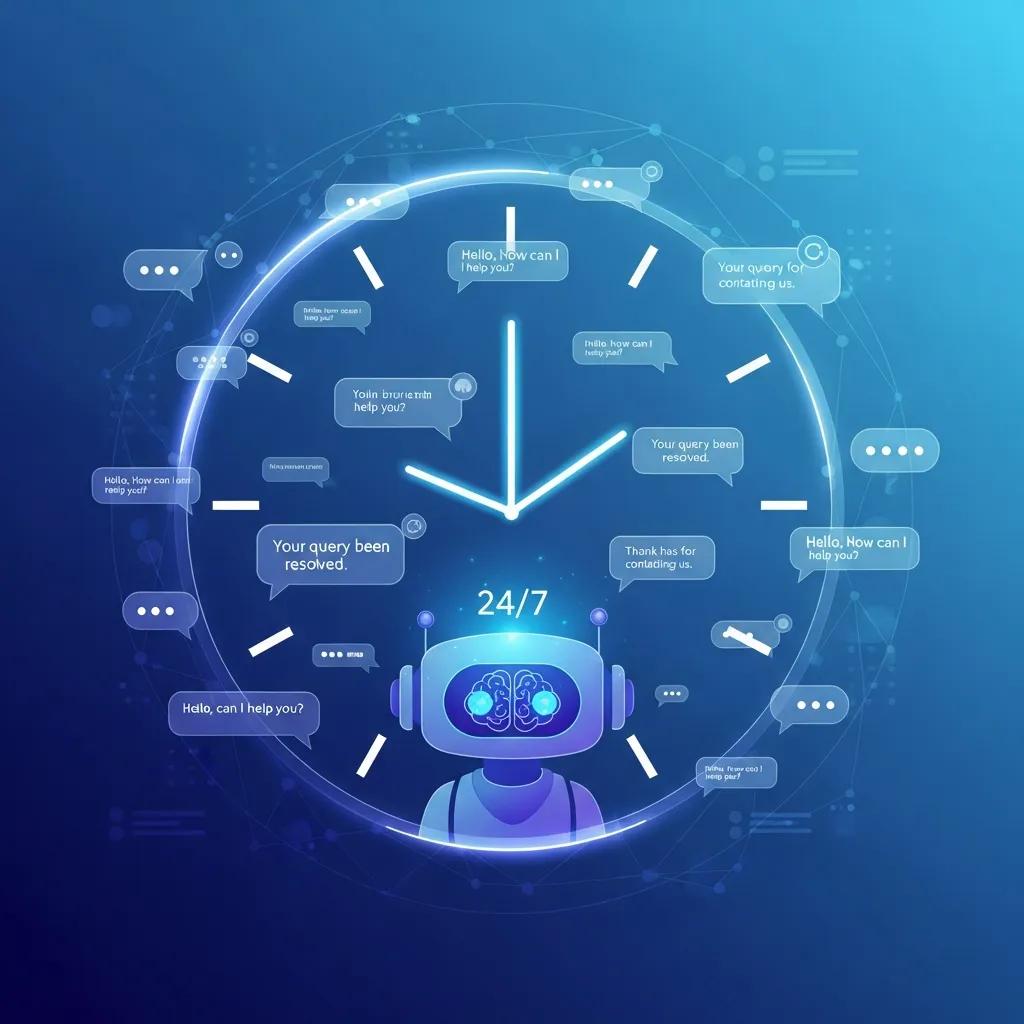
Customer service automation can cover routine requests outside business hours. First, define which questions the chatbot may answer. Next, set rules for booking, case creation, and human handoff. Keep the conversation history available to an agent so customers need not repeat themselves. Monitor failures and update answers as your services change. Clear limits help people understand when the bot will bring in a person.
In What Ways Do AI Chatbots Personalize Customer Interactions?
A chatbot can use details from the current conversation to suggest a relevant next step. With appropriate access, it can also reference a prior order or support case. However, customer service automation should collect only the data needed for that task. Protect sensitive details and explain when staff will review a request. For a broader risk framework, see the NIST AI Risk Management Framework. Measure whether the experience helps customers resolve issues.
What Are the Key Benefits of AI Chatbots for Lead Qualification and Generation?
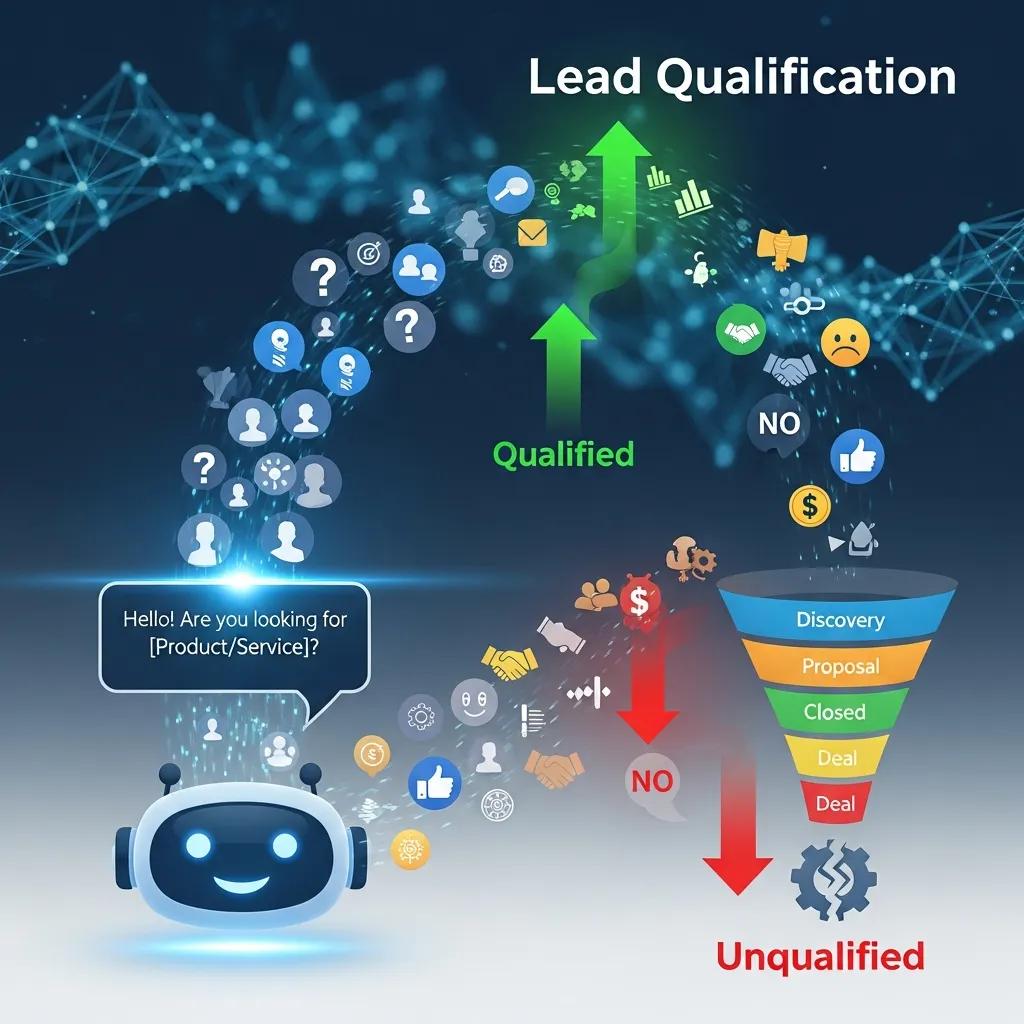
Chatbots can ask qualifying questions and pass useful context to a sales team. For instance, a manufacturer might collect a project scope, quantity, and delivery date before an RFQ handoff. Customer service automation can also route a sales inquiry to the right person. Set a clear threshold for follow-up, then compare lead quality and response time with your baseline. Revise the questions when they confuse visitors. See a related contractor chatbot example for another intake scenario.
AI chatbots deliver several practical lead-generation advantages:
Qualification and Handoff
- Continuous Capture: Bots record inbound inquiries 24/7 so no lead slips through the cracks.
- Automated Qualification: Conversational scoring frameworks prioritize leads for immediate outreach or nurture.
- Faster Sales Handoff: Qualified prospects are routed to sales or scheduled for calls, reducing time-to-contact.
To compare how chatbots help different small-business types, review the following scenarios.
| Use Case | Availability | Cost Savings | Lead Quality Uplift | Typical KPIs |
|---|---|---|---|---|
| Small service business | 24/7 instant responses | Reduced agent hours | +10–25% qualified leads | Time-to-first-response, CSAT |
| B2B manufacturing | 24/7 technical triage | Lower RFQ processing cost | +20–40% qualified RFQs | Qualified RFQs/week, conversion rate |
| Professional services | Automated intake | Fewer admin hours | +15–30% demo bookings | Booked consultations, NPS |
This table shows how availability and automated qualification shift outcomes by use case and which KPIs matter most. The next section looks at how chatbots map qualification frameworks like BANT into live conversations and the operational savings that follow.
MarketMagnetix Media Group provides Chatbot Development and Optimization for AI to help teams turn these benefits into production systems. Our manufacturing chatbot examples demonstrate 24/7 lead qualification, technical Q&A handling, and automatic sales call booking—capabilities many small B2B firms use to capture higher-quality RFQs and measurable ROI.
How Do AI Chatbots Automate Lead Qualification Using BANT and Other Frameworks?
Chatbots translate BANT fields into conversational prompts that collect structured qualification data without forcing users through long forms. A script will ask about project scope (need), decision authority, budget ranges, and timelines—each response updates a lead score. Routing rules use scoring thresholds: high scores trigger immediate booking and CRM assignment, mid scores enter nurture sequences, and low scores are logged for content follow-up. Automation also supports conditional prompts for industry-specific details (for example, technical specs for manufacturers), so the lead record is useful from the first touch. Implementing this requires mapping prompts to CRM fields and testing flows to avoid over-questioning—a key step to keep engagement high.
What Cost and Efficiency Gains Result from AI Chatbot Implementation?
Deploying chatbots typically reduces live-agent time on routine queries and increases throughput for qualification tasks, producing measurable cost savings and efficiency gains. For many small businesses, automating FAQs and bookings cuts support time, frees staff for complex work, and lowers average cost per conversation. Conversion often improves because bots shorten time-to-first-response and consistently apply qualification rules, which raises lead-to-opportunity ratios. Operational teams can shift resources away from repetitive intake toward closing activities, creating both short-term savings and longer-term revenue impact. Those efficiency gains make investment in thoughtful conversational design, monitoring, and incremental optimization worthwhile.
Implementing Customer Service Automation
Small businesses launch chatbots successfully by following a prioritized roadmap: define goals, pick the right platform, design conversation flows, integrate with CRM, test with real users, and set a monitoring cadence for continuous improvement. Clear goals focus the bot on the highest-impact use cases—appointment booking, RFQ capture, or lead qualification—so effort drives measurable outcomes. Platform choice should match technical capacity and integration needs: simple FAQs can use no-code builders, while complex qualification and CRM sync require more customizable platforms. A structured plan reduces launch risk and speeds time-to-value. Below is a practical checklist to get you ready.
Practical implementation checklist:
- Define Goals and KPIs: Pick primary outcomes like qualified leads/week or reduced response time.
- Map Conversation Flows: Draft scripts for core use cases including greeting, qualification, and escalation.
- Integrate with CRM: Configure field mappings and automation triggers before launch.
- Test and Soft Launch: Run closed betas, gather feedback, and iterate on flows.
- Monitor and Optimize: Track KPIs, retrain NLU, and update content based on failure intents.
When choosing platforms, use a short EAV-style comparison to match capabilities to your needs.
Platform comparison for small-business selection:
| Platform Type | Key Attribute | Best-for / Notes |
|---|---|---|
| No-code builders | Low complexity, fast setup | Best for FAQ and simple booking use cases |
| Customizable platforms | Flexible flows, NLU tuning | Best for lead qualification and CRM workflows |
| Enterprise solutions | Advanced analytics, SLAs | Best for large-volume B2B with strict governance |
This comparison helps owners weigh price, implementation time, and integration depth when selecting a platform. For teams that prefer expert help, MarketMagnetix Media Group offers Chatbot Development and Optimization for AI to handle design, CRM integration, and ongoing tuning—an efficient route for businesses without in-house AI expertise.
What Are the Step-by-Step Processes to Define, Design, and Launch AI Chatbots?
Start with clear KPIs and a prioritized use case to steer design and integration decisions. Document the top customer intents to automate, then map dialogue flows that collect only the data needed to meet those KPIs. Build conversation scripts and fallback responses, set escalation rules that protect experience, and implement CRM mappings and automation triggers. Run iterative tests with sample users to refine tone and reduce ambiguity. A phased rollout—soft launch to a segment, analyze metrics, then scale—lets teams validate value and adjust flows before full deployment.
Choosing a Customer Service Automation Platform
Choosing a platform means evaluating NLP quality, customization, CRM connectors, analytics, and security/compliance against your use case and budget. Confirm whether the vendor has native CRM integrations or supports webhook/API syncing, and define exact data mappings from conversation fields to CRM records before going live. After integration, run end-to-end tests that simulate conversations through to CRM record creation and automation triggers to ensure tags and workflows behave as expected. Security checks should cover data governance, encryption, and access controls. Clear integration tests and documented mappings reduce post-launch issues and make attribution from chatbot conversations to revenue reliable.
Which Industry-Specific Use Cases Demonstrate AI Chatbot Success?
Industry-specific chatbots streamline workflows by capturing the precise inputs each sector needs to qualify leads or serve clients, delivering measurable gains in conversion and efficiency. In manufacturing, chatbots extract technical specs, quantities, and delivery requirements to generate qualified RFQs and schedule engineering calls. Contractors use bots for instant availability checks and initial scope intake that speed site visits and estimates. Professional services—law and healthcare—use intake-focused flows that gather case details or symptoms while preserving compliance and privacy. These tailored flows cut friction and surface higher-quality leads for sales teams.
How Do AI Chatbots Enhance Lead Generation for Manufacturers and Contractors?
For manufacturers and contractors, chatbots collect structured technical details—material specs, volumes, tolerances, and delivery windows—that map directly to RFQ templates or proposals. A well-designed manufacturing bot asks targeted follow-ups when a customer mentions a requirement, bundles answers into an RFQ, and schedules a call with the right engineer. That reduces admin work, speeds inquiry-to-quote cycles, and raises the share of qualified RFQs. MarketMagnetix Media Group’s manufacturing implementations emphasize 24/7 qualification, automated technical Q&A, and scheduled sales calls—outcomes that help B2B suppliers convert casual interest into prioritized opportunities.
What Are the Benefits of AI Chatbots for Lawyers and Medical Practitioners?
In legal and medical practices, chatbots convert static forms into guided conversations that collect case or symptom details, availability, and urgency while respecting confidentiality safeguards. For medical intake, bots can pre-screen symptoms, gather insurance and contact data, and schedule appointments or triage to telehealth—reducing front-desk load. For law firms, intake bots capture case type, timeline, and consent, then route high-priority matters to intake specialists. Compliance requirements—HIPAA-equivalent safeguards, encryption, limited retention, and clear consent flows—must be built into the design. These benefits free clinicians and lawyers to focus on care and counsel instead of administrative intake, and they set the stage for measuring performance and ROI.
Measuring Customer Service Automation Results
Measure chatbot ROI by combining direct cost savings with revenue attribution from converted leads, and use defined KPIs with a steady measurement cadence to guide optimization. Start with baseline metrics—current response times, qualified leads per week, conversion rates, and agent hours—then track how a chatbot shifts those numbers over time. Attribution models should connect bot interactions to CRM opportunities and pipeline outcomes to quantify incremental value. Regular reporting and A/B tests of conversation flows reveal high-leverage improvements that boost qualified lead rates and lower cost per lead. Keep a structured loop—measure, hypothesize, test, deploy—to make optimization data-driven and incremental.
Key KPIs to track chatbot success include these core metrics and sample benchmarks for small businesses:
- Conversation Completion Rate: Percentage of conversations that reach a goal (benchmark 60–80%).
- Qualified Lead Rate: Portion of conversations meeting qualification thresholds (benchmark 10–30%).
- CSAT / NPS: Customer satisfaction after bot interactions (benchmark CSAT 70–85%).
- Time-to-First-Response: Speed from initial contact to first reply (benchmark under 1 minute for chat).
Below is a table linking KPIs to suggested small-business benchmarks and measurement notes.
| KPI | Measurement Method | Benchmark / Target |
|---|---|---|
| Conversation Completion Rate | Completed goal events / total conversations | 60–80% |
| Qualified Leads per Week | CRM-tagged qualified leads from bot | 5–30 (scale with traffic) |
| CSAT | Post-interaction survey score | 70–85% |
| Time-to-First-Response | System logs | < 60 seconds |
These KPIs establish a baseline for continuous improvement and for attributing chatbot-driven revenue inside your CRM. After you set measurement, run quarterly reviews and iterative experiments to refine scoring thresholds and messaging.
MarketMagnetix Media Group can help teams connect chatbot conversations to CRM pipelines and optimize qualification logic. Our Chatbot Development and Optimization for AI service focuses on B2B lead generation, measurable ROI, and 24/7 conversion AI—making us a practical partner for businesses that want expert-led deployments and ongoing tuning.
What Key Performance Indicators Track AI Chatbot Success?
Primary KPIs include conversation completion rate, qualified lead rate, CSAT, time-to-first-response, and downstream conversion rate; each metric should have a clear definition and reporting source. Conversation completion measures whether interactions reach the intended outcome; qualified lead rate tracks the share of interactions that meet your qualification rules and are tagged in CRM. CSAT captures user experience through short post-chat surveys, and time-to-first-response monitors instant-response performance. Build dashboards for these KPIs and map them to revenue so leaders can see how chatbots contribute to pipeline and where to prioritize improvements.
How Can Businesses Continuously Improve AI Chatbot Performance?
Continuous improvement requires a steady rhythm of analytics reviews, failure-intent analysis, NLU retraining, and A/B testing of messages and flows to boost completion and conversion rates. Start with weekly checks for acute failures and monthly trend reviews, then run controlled A/B tests on greetings, phrasing, or routing thresholds to measure impact on qualified lead rates. Retrain NLU models with newly captured utterances and update knowledge bases to reduce misclassification. A quarterly optimization checklist should include top failure intents, scoring-threshold adjustments, and CRM mapping validation to keep the system aligned with changing business priorities.
What Are the Emerging Trends and Future Outlook for AI Chatbots in 2024 and Beyond?
In 2024, trends emphasize generative AI for dynamic replies, predictive analytics for lead prioritization, multimodal interfaces (voice + text), and improved sentiment detection that adapts tone and escalation. Generative models will help draft richer responses, summarize conversations for agent handoff, and create tailored follow-ups that move leads through nurture. Predictive analytics will combine conversational signals with CRM history to surface next-best-actions and prioritize high-intent prospects. These advances promise smoother customer experiences and smarter routing—but they also require human-in-the-loop controls, factuality checks, and strong privacy guardrails to ensure accuracy and compliance.
How Will Generative AI and Predictive Analytics Shape Customer Service Automation?
Generative AI will allow chatbots to compose nuanced replies, summarize long interactions for agents, and draft personalized follow-up messages—cutting manual content work for teams. Predictive analytics will score leads using conversational cues plus CRM history to surface high-intent prospects for immediate outreach. Together, these tools enable next-best-action recommendations that boost conversions and reduce manual triage. Safe implementation needs human oversight, factuality checks, and monitoring to limit hallucination and keep outputs aligned with brand and legal standards.
What Innovations Are Driving the Next Generation of AI Chatbots?
Key innovations include advanced sentiment and emotion analysis that adapts a bot’s tone to user mood, multimodal inputs that accept voice and images for richer context, and deeper analytics that connect conversation behavior to revenue outcomes. These capabilities make bots more context-aware and able to handle complex tasks like technical troubleshooting with image attachments or voice triage. For small businesses, a phased approach—start with text automation, then add predictive features and multimodal inputs—lets teams capture value without overextending resources. As these capabilities roll out, maintaining ethical and privacy standards will be critical to preserve customer trust and long-term adoption.
Frequently Asked Questions
What types of businesses can benefit from AI chatbots?
Chatbots help a wide range of businesses: small service providers, B2B manufacturers, and professional practices like law and healthcare. Each sector can use bots to automate customer interactions, streamline intake and qualification, and improve efficiency. For example, manufacturers can collect technical specs for RFQs, while service firms can automate appointment scheduling. Tailoring the bot’s flows to industry needs delivers better engagement and higher conversion rates.
How do I ensure my AI chatbot complies with data privacy regulations?
To stay compliant, implement strong data governance: encrypt sensitive data, limit retention windows, and collect clear consent before capturing personal information. Regularly review data handling practices against regulations like GDPR or HIPAA and design the bot to avoid asking for unnecessary personal details. Built-in consent flows, access controls, and retention policies help maintain user trust and legal compliance.
What are the common challenges faced when implementing AI chatbots?
Common challenges include accurate intent recognition, setting user expectations, and integrating with existing systems. Misunderstood queries can frustrate users, so invest in robust NLP and clear fallback options. Manage expectations with upfront messaging about what the bot can and cannot do. Integration with CRM and other back-end systems can be technically demanding, so plan mapping and testing carefully to ensure reliable data flow.
How can I measure the success of my AI chatbot?
Measure success using KPIs like conversation completion rate, qualified lead rate, CSAT, and time-to-first-response. Capture baseline metrics before launch so you can compare improvements. Regular reporting, A/B testing, and cohort analysis will surface optimization opportunities and show how the bot impacts revenue and operational efficiency.
What role does user feedback play in optimizing AI chatbots?
User feedback is essential. Post-interaction surveys and conversation logs reveal friction points and misunderstandings that guide design changes. Use feedback to refine flows, improve phrasing, and expand the knowledge base. Regularly incorporating user insights ensures the bot evolves to meet real customer needs and raises satisfaction over time.
Can AI chatbots handle complex customer inquiries effectively?
Yes—when designed for it. Advanced NLP and intent recognition let bots triage complex issues and gather context before escalating to a human. Robust fallback paths and clear escalation rules ensure users get timely help, while continuous training and knowledge updates expand the bot’s ability to handle diverse requests.
For further guidance, see the NIST AI Risk Management Framework. Also explore our guide on Unlock the Benefits of AI Chatbots for Contractors Today.


