

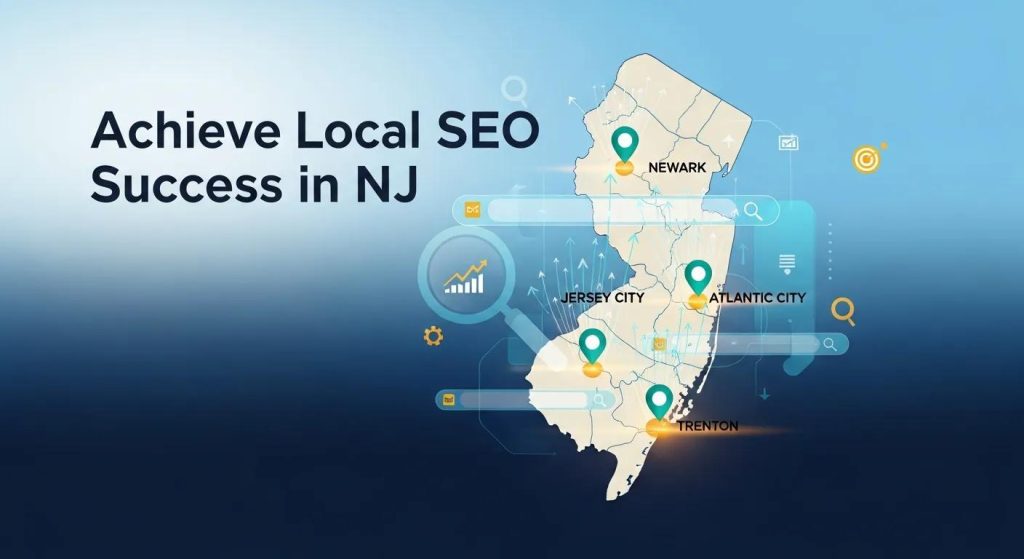
New Jersey local SEO is not a statewide keyword exercise. A business competes from its real location or service area against nearby alternatives, and the correct strategy depends on where customers are, what they need, and whether the business can serve them.
Google explains that local results are mainly determined by relevance, distance, and prominence. No agency can buy a better local ranking or remove the distance factor. The practical job is to make the business accurate, eligible, easy to understand, well supported by evidence, and easy for a qualified customer to contact.
¿Busca posicionamiento en buscadores en New Jersey? Esta guía explica cómo mejorar la presencia local mediante Google Business Profile, páginas de servicios y ubicaciones, directorios, reseñas y medición de llamadas y formularios.
New Jersey Local SEO Priorities
A defensible New Jersey local SEO program should address five connected systems:
- Business Profile eligibility and ownership. The correct people control the account, the real-world business is represented accurately, and duplicate or ineligible profiles are removed.
- Business information and local relevance. Categories, services, hours, address or service area, phone number, website and other profile details match the actual operation.
- Website architecture and evidence. Searchers can find distinct service, location, provider and project information without encountering thin city pages or repeated copy.
- Prominence and trust. Reviews, local references, industry listings, links, media mentions and business history support the entity.
- Conversion and measurement. Calls, forms, appointments, directions, qualified inquiries and sales feedback can be traced back to the relevant profile, page or campaign.
These systems should be improved together. A complete profile cannot compensate for a weak website, and a well-built website cannot make an ineligible or inaccurate Business Profile compliant.
1. Configure Google Business Profile Correctly
Start with eligibility and real-world accuracy. Google’s business-representation guidelines require the profile name, address, service area, category and other details to reflect how the business actually operates. The profile should use the real business name rather than a keyword-expanded variation.
Storefront businesses
A storefront should use a location that customers can visit during the stated hours, with permanent signage and staff present. A virtual office, mailbox or unstaffed coworking address should not be used to create local visibility.
Service-area businesses
A business that travels to customers but does not serve them at its address should generally hide the address and define accurate service areas. Google permits up to 20 service areas and advises that the overall area should ordinarily remain within about two hours of driving time from the business base. A service-area business should not create a separate profile for every city it wants to rank in.
Multi-location businesses
Each legitimate location should have separate staff, an actual operating presence and location-specific contact information where appropriate. Location pages on the website should support those real locations; they should not be used to manufacture locations that do not exist.
Profile fields to review
- Primary and secondary categories that describe the core business
- Business name, address or hidden-address setting, phone and website
- Regular, holiday and special hours
- Services, products and appointment or order links where applicable
- Business description based on factual, customer-useful information
- Photos and videos that represent the actual location, team, work or products
- Owner and manager access, including removal of former vendors or employees
Completeness helps Google and customers understand the business, but no individual field guarantees placement in the local pack.
2. Build New Jersey Local SEO Pages Around Real Services and Markets
New Jersey contains dense clusters of municipalities, counties and overlapping service areas. That does not mean every municipality needs its own page. Create a location page only when the business has a real reason to serve that market and enough distinct information to make the page useful.
Service pages
Give each commercially distinct service a clear page that explains scope, customer fit, process, limitations, service area, evidence and the next step. A page about emergency HVAC repair should not be interchangeable with a replacement-system page. A law-firm practice-area page should not be a city-name variation of another practice page.
Location pages
A useful New Jersey location page can include:
- The services available in that market
- Operating or scheduling constraints
- Local projects, customers, photos or examples that can be published
- Provider, technician or office information
- Relevant regulations, logistics or property conditions
- Directions, parking or accessibility information for real offices
- Local FAQs based on actual customer questions
Avoid pages that only swap the town name while repeating the same copy. Those pages provide little value and can create index bloat and cannibalization.
Internal linking and structured data
Link related service, location, provider, project and contact pages so both visitors and search systems can follow the business structure. Structured data can clarify the organization, location, service and page relationships, but it does not create eligibility or guarantee rankings.
For broader implementation work, review the SEO services and AI search optimization pages.
3. Control Listings, Citations and Duplicate Records
Directory work should focus on ownership, accuracy and useful coverage—not the largest possible submission count. Begin with platforms customers and search systems are likely to use, then add relevant industry and regional sources.
- Claim the listing under a client-owned or business-controlled account.
- Use the same real-world name, phone, website and address or service-area information.
- Remove or suppress duplicate records when the platform permits it.
- Record login ownership, verification method and profile URL.
- Use tracking parameters on profile website links where appropriate.
- Review aggregators and directory services before paying for recurring distribution.
The local listing management service covers ownership, profile configuration, duplicate cleanup and reporting. The 2026 local business directory guide explains which platforms deserve priority.
4. Use Reviews as Customer Evidence, Not a Shortcut
Google states that reviews and positive ratings can contribute to prominence and help a business stand out. Reviews also affect whether a searcher trusts the company enough to call, request directions or visit the website.
A review process should:
- Ask real customers for honest feedback without requiring a positive rating
- Avoid incentives, review gating and employee-created reviews
- Use a consistent post-service request process
- Respond without exposing private customer or case information
- Escalate disputed or sensitive responses internally before publishing
- Flag reviews only when there is a policy-based reason
Reviews should support the business’s actual service quality. Marketing cannot compensate for unresolved operational or customer-service problems.
5. Address Spanish-Language Search Intent Deliberately
New Jersey businesses that genuinely serve Spanish-speaking customers should treat Spanish search as a complete customer journey, not a translated keyword inserted into an English page.
For terms such as posicionamiento en buscadores en New Jersey, consider whether the business can provide:
- Accurate Spanish service information
- Spanish-speaking intake or customer support
- Forms, appointment instructions and confirmation messages in Spanish
- Translated policies, disclaimers or regulated content where needed
- Separate Spanish URLs and language annotations when a full translated section is justified
A few impressions for a Spanish query are not enough by themselves to justify a duplicate Spanish site. Build translated pages when there is verified demand and an operational ability to serve the audience.
6. Measure New Jersey Local SEO and Qualified Outcomes
Local SEO reporting should separate exposure from business results. A useful reporting model includes:
- Search visibility: queries, pages, impressions, clicks and average position in Google Search Console
- Business Profile interactions: website clicks, calls, directions, bookings and other available profile actions
- Website conversion: successful forms, phone clicks, appointments, quote requests and purchases
- Lead quality: service requested, location, fit, appointment status and disposition
- Business outcome: completed job, signed matter, new patient, RFQ, sale or other verified result
Google now supports linking eligible Business Profiles with Google Analytics so aggregated profile-interaction data can be shared with the property. That does not replace call tracking, form records or CRM feedback, but it can add context to the reporting system.
Use the GA4 implementation guide to define events, validation and offline-outcome tracking.
7. Adjust the Strategy by Industry
Contractors and HVAC companies
Prioritize service areas, emergency and scheduled services, project evidence, mobile call paths and booking capacity. Do not advertise markets or hours the operation cannot support. See contractor marketing and HVAC marketing.
Law firms and medical practices
Provider and practitioner profiles, office eligibility, service or practice-area clarity, reviews, intake paths and regulated claims require additional care. See law firm marketing and medical practice marketing.
Manufacturers
Local visibility may support recruiting, supplier discovery and regional credibility, but technical capabilities, industries served, certifications, equipment, RFQ paths and national search demand are usually more important than city-page volume. See manufacturing marketing.
Recommended Implementation Sequence
- Establish the baseline. Inventory profiles, owners, locations, service areas, listings, pages, conversions and known problems.
- Correct eligibility and ownership. Resolve duplicate, suspended, unverified or vendor-controlled profiles before expanding content.
- Fix core business information. Align categories, hours, services, phone, website and address or service-area settings.
- Repair the website structure. Improve the service, location, provider, project and contact pages that support local intent.
- Normalize important listings. Correct high-value platforms and document account ownership.
- Implement review and response procedures. Assign responsibility and protect customer privacy.
- Validate measurement. Test calls, forms, appointments, profile links and CRM attribution.
- Expand only from evidence. Add locations, languages and content topics when Search Console, profile data, sales feedback or customer demand supports them.
What New Jersey Local SEO Cannot Guarantee
No consultant or agency controls proximity, Google’s algorithms, competitor activity, review behavior, platform verification, customer decisions or the client’s response process. Local SEO cannot guarantee local-pack placement, rankings, calls, appointments or revenue.
A credible engagement is accountable for defined work, accurate implementation, documented changes, policy-aware decisions and transparent reporting.
Request a New Jersey Local Search Review
MarketMagnetix can review the business’s Google Business Profile, website architecture, listings, duplicate records, review process and conversion tracking. The output should identify what is verified, what is uncertain, and which corrections deserve priority.


