
Personalized Marketing at Scale: Tailored Experiences Built for Small Businesses
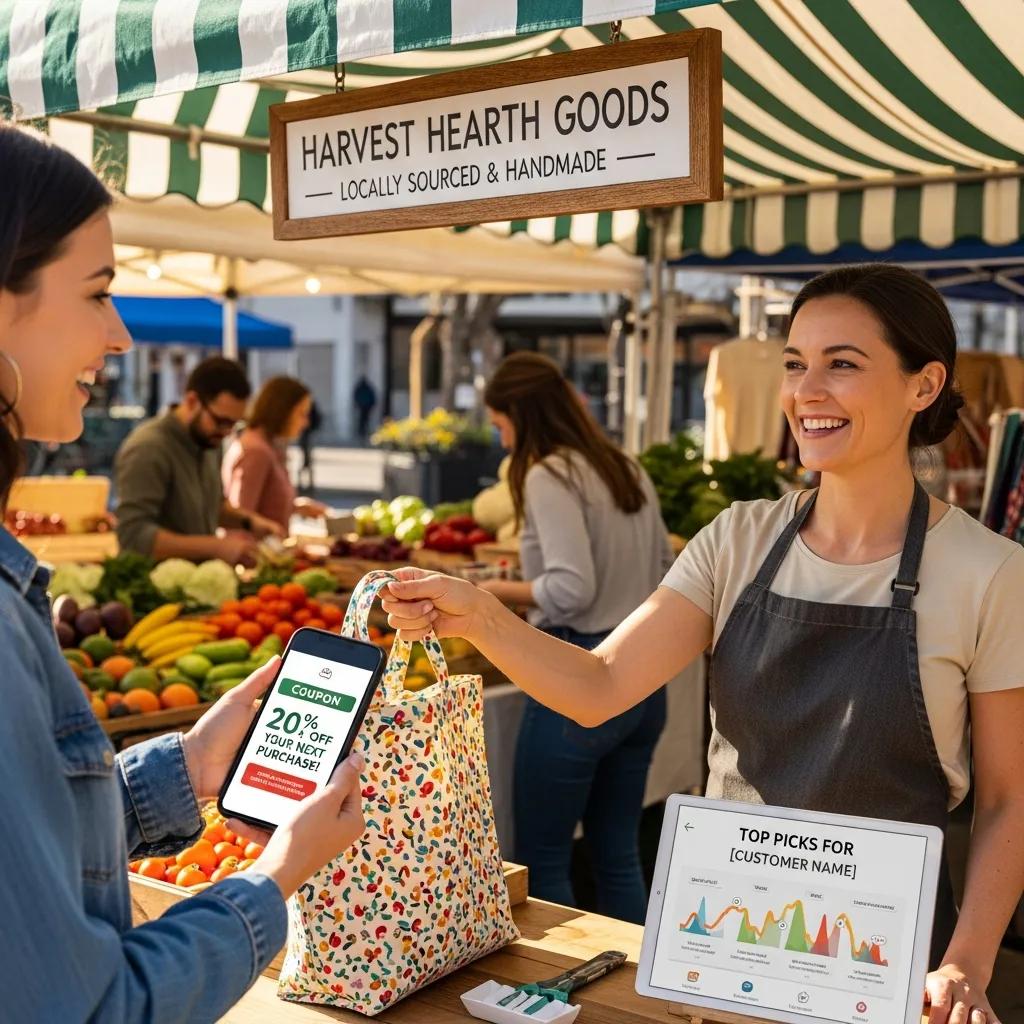
Personalized marketing at scale uses first‑party data, automation, and AI so you can deliver the right message to the right person — across channels and at volume. When small businesses rely on one‑size‑fits‑all campaigns they burn budget and miss nearby opportunities. A practical, scalable personalization approach boosts engagement, lowers acquisition costs, and increases lifetime value. This guide shows what scalable personalization looks like, why it gives small businesses an edge, and how to build an AI‑ready foundation for hyper‑personalization, dynamic content, and measurable ROI. You’ll find step‑by‑step advice — from a data audit and a quick pilot to measurement frameworks and vendor selection — plus lead‑generation tactics for service pros and an SMB‑friendly platform comparison. We call out concrete tactics like micro‑segmentation, CDP usage, and conversational qualification so you can build a practical program that improves conversions and retention without blowing your budget.
Why Is Personalized Marketing Essential for Small Businesses?
For small businesses, personalization means mapping local signals and first‑party data to offers that feel timely and relevant. Relevance removes friction: people respond more to messages that reflect their history, intent, and local context. That drives higher conversion and reduces wasted ad spend. Small businesses often sit on rich local and transactional signals big brands miss — when those signals are used well, they create a measurable advantage. The result: clearer engagement gains, lower customer acquisition costs, and compounding value through repeat business and referrals.
Personalized approaches deliver measurable business outcomes:
- Engagement Lift: Relevant messaging increases click‑through and open rates by giving recipients context that matters.
- Conversion Improvement: Tailored offers shorten the path to action by matching intent to the right next step.
- Cost Efficiency: Better targeting reduces CAC by concentrating spend on higher‑propensity prospects.
- Lifetime Value Growth: Relevant experiences improve retention and repeat purchases, extending CLV over time.
| Personalization Type | Cost to Implement | Expected Conversion Lift | Typical Channels |
|---|---|---|---|
| Basic Segmentation | Low | 5–10% | Email, Social |
| Hyper-personalization | Medium | 10–20% | Email, Web, Ads |
| AI-driven Personalization | Medium–High | 15–40% | Web, App, Ads, Chat |
In short: segmentation gives quick wins; AI‑driven personalization delivers larger, sustained lifts as your data and tooling mature. Use that trade‑off to prioritize a cost‑efficient roadmap.
What Are the Key Benefits of Personalization at Scale?
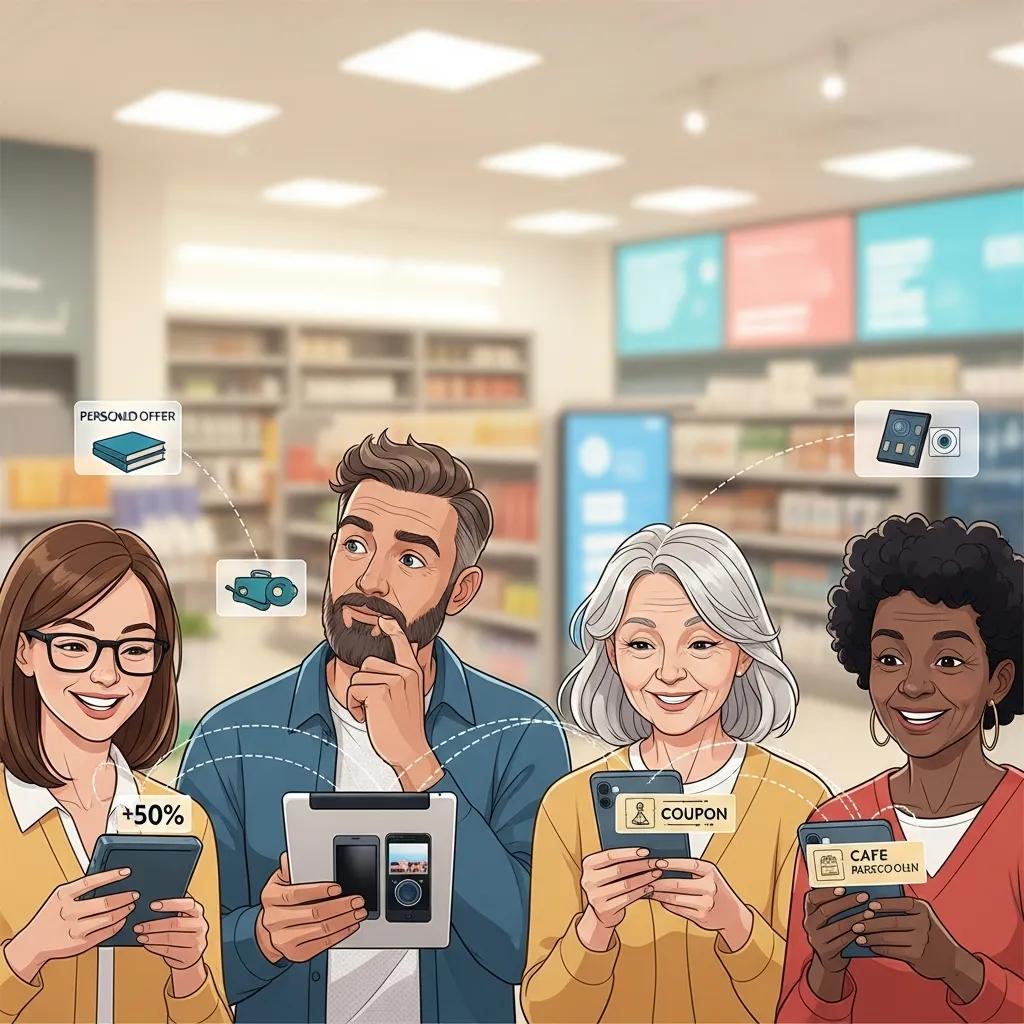
Personalization at scale produces compounding benefits across acquisition and retention. First, relevance increases engagement: behavior‑ or location‑based messages outperform generic blasts. Second, targeted offers reduce friction in the conversion path, lowering CAC and shortening time‑to‑purchase. Third, consistent, context‑aware experiences build loyalty and lift lifetime value. Put together, relevance boosts engagement, engagement lifts conversion, and consistent relevance improves retention.
| Personalization Benefit | Mechanism | Business Impact |
|---|---|---|
| Higher Engagement | Contextual messaging | More clicks and sessions |
| Lower CAC | Targeted ad spend | Reduced wasted impressions |
| Increased CLV | Personalized retention flows | More repeat revenue |
Those combined effects make a clear business case for moving beyond one‑size‑fits‑all marketing toward a staged personalization program.
How Does Personalization Improve Customer Engagement and ROI?
Personalization raises engagement by matching content and offers to a customer’s context, intent, and lifecycle stage — which builds relevance and trust. The process is straightforward: capture signals (searches, purchases, page behavior), infer intent with simple models, and serve dynamic content or offers that fit that intent. For example, a contractor’s site can surface service pages and local proof for visitors from nearby ZIP codes, increasing booking likelihood. To measure ROI, compare incremental conversion lift against the cost of data tools and creative variants.
- Scenario: A personalized landing flow that moves conversion from 2% to 3.5% on 5,000 monthly visitors yields 75 extra leads per month. Multiply that by your average lead value and you can justify incremental spend on personalization tools. Framing initiatives as signal → inference → tailored experience helps SMBs run experiments that quantify returns and guide scaling decisions.
How Can Small Businesses Implement AI-Driven Personalization Effectively?
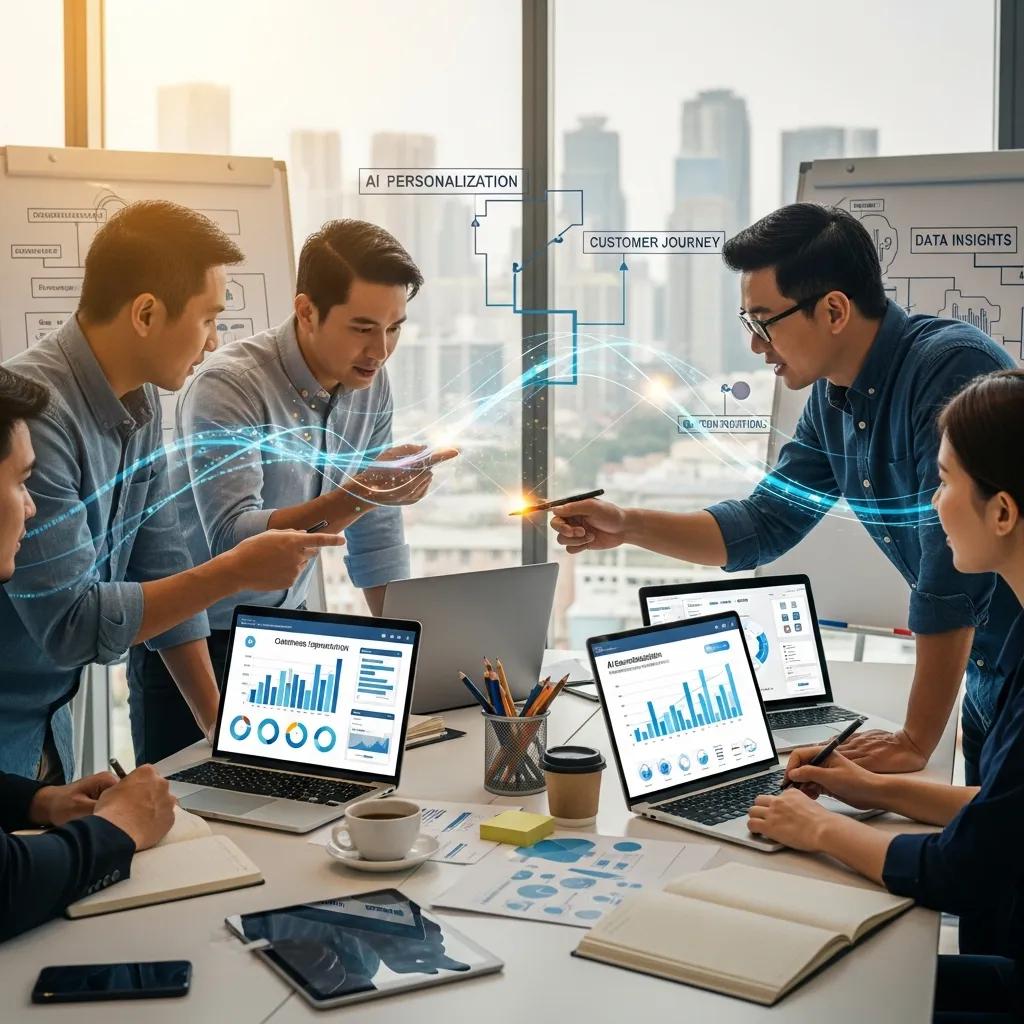
Begin AI‑driven personalization with reliable first‑party data and a lightweight CDP or data layer to unify customer profiles. Then add simple models and automations to power dynamic content and scoring. Key steps: audit data sources, set clear personalization goals, run a quick pilot on a high‑impact touchpoint, and scale automated recommendations once you see positive lift. Predictive lead scoring and recommendation engines let you automate personalization without a large engineering team when you choose off‑the‑shelf platforms.
Research shows automation helps small marketing teams work smarter, streamline processes, and improve customer engagement.
Automation for Small Business Digital Marketing Efficiency
The rapid advance of automation has reshaped digital marketing for small businesses. This study examines how automation tools can streamline workflows, improve customer engagement, and increase overall marketing effectiveness for smaller teams.
Implementation of Automation Technology in Enhancing Digital Marketing Efficiency for Small Businesses, SSD Waramena, 2025
- Conduct a data audit to consolidate first‑party signals and find gaps.
- Define priority personalization use cases and measurable KPIs.
- Pilot predictive scoring and dynamic content on a single channel.
- Measure lift, refine models, then expand to other touchpoints.
- Automate workflows and add guardrails for production.
This staged approach limits risk and keeps results measurable, so small teams can move from manual personalization to AI‑driven scale without overcommitting resources.
What AI Technologies Enable Scalable Customer Experience Marketing?
A few AI technologies power scalable personalization for SMBs. Predictive analytics estimate lead propensity and CLV to guide spend and prioritization. Recommendation engines select content or services dynamically to raise on‑site relevance. Natural language processing powers chatbots and personalized messaging for 24/7 conversational qualification. Customer data platforms unify first‑party data to feed models and personalization engines. Together: CDPs centralize identity, models infer behavior, and personalization engines deliver tailored content in real time.
Further research highlights AI’s role in improving segmentation and recommendations within personalized marketing.
AI for Hyper-Personalized Marketing Strategies
This study explores AI‑driven hyper‑personalization, including its opportunities, barriers, and outlook. It provides insights into how AI improves customer segmentation, recommendation quality, and overall marketing strategy.
Leveraging Artificial Intelligence for Hyper-Personalized Marketing: Opportunities and Challenges in the Digital Era, 2025
These tools work at SMB scale because many vendors offer modular, low‑code integrations and APIs that plug into common CMS, CRM, and ad platforms. The right mix depends on the signals you have and which channels you prioritize for fast impact.
How Does MarketMagnetix Integrate AI in Personalized Marketing Services?
At MarketMagnetix Media Group we map practical AI capabilities into measurable personalization programs that don’t overwhelm small teams. Our services include AI optimization, chatbot development, SEO, web design, local map listing optimization, social ads, and Google PPC. We combine these to build funnels that link predictive scoring, chat qualification, and dynamic on‑site content. For example, we can build a chatbot that qualifies visitors and feeds scores into an automation workflow while local listing and PPC work sends high‑intent local traffic into personalized landing flows. The aim is to turn local signals into qualified leads and clear revenue uplift.
If you want help turning an AI personalization pilot into a repeatable program, MarketMagnetix Media Group can assess your data foundation and map a pilot roadmap.
What Are Hyper-Personalization Strategies for Small Business Marketing?
Hyper‑personalization goes beyond segmentation by using individual signals, predictive models, and real‑time context to craft offers and content for each person. While segmentation groups users, hyper‑personalization adjusts messages for individuals based on propensity, recent behavior, and local context. For small businesses, focus on low‑lift, high‑impact tactics: dynamic landing pages, micro‑offers for high‑propensity visitors, and lifecycle‑triggered messaging that fits service‑specific needs. These tactics increase relevance and speed conversions when executed with a focused pilot and clear KPIs.
Quick hyper‑personalization tactics SMBs can implement:
- Real‑time website content that changes by referral source or visitor location.
- Micro‑offers shown to visitors with strong intent signals (e.g., repeated pricing page visits).
- Personalized email sequences triggered by behavior or lifecycle stage.
- Contextual ad creatives driven by recent searches or site actions.
- Chat qualification that surfaces tailored next steps.
These moves typically rely on behavioral triggers, template‑based content variants, and a lightweight personalization engine or CMS plugin that serves content based on rules.
How Does Hyper-Personalization Differ from Basic Segmentation?
Segmentation groups audiences by shared attributes; hyper‑personalization targets individuals using deeper behavioral and predictive signals. The difference is granularity and timing: segmentation works well for batch campaigns (e.g., “homeowners, ages 30–55”), while hyper‑personalization reacts to moment‑by‑moment signals (e.g., a visitor who viewed roofing pages three times in 24 hours). Tooling differs too: email platforms handle segmentation, but hyper‑personalization benefits from a CDP or personalization engine with real‑time decisioning. Start with segmentation for predictable wins, then move to hyper‑personalization once you have repeat signals and automation capacity.
Progressing from segmentation to hyper‑personalization builds confidence in the mechanics before you invest in advanced real‑time systems.
Which Data-Driven Techniques Enhance Tailored Customer Journeys?
Key techniques include behavioral triggers, propensity segments, lifecycle messaging, and dynamic content delivery across channels. Behavioral triggers launch messages when users take specific actions; propensity models score users for likely conversion and help prioritize outreach. Lifecycle messaging nurtures contacts based on journey stage; dynamic content adapts pages and emails to each user profile. Channel examples: personalized email offers based on recent behavior, ad creative rotation keyed to predicted intent, and web recommendations driven by browsing history.
- Implementation note: start with rule‑based triggers, layer in predictive models as data grows, and monitor lift to refine thresholds.
When combined thoughtfully, these techniques shorten lead cycles and increase conversion efficiency.
How to Generate Personalized Leads for Service Professionals at Scale?
To generate personalized leads at scale for service pros, align discovery channels with tailored landing experiences and fast conversational qualification. The flow usually starts with local discovery or paid traffic, routes prospects to personalized landing pages that reflect their needs, and uses chat or rapid response to qualify and capture contacts. Paid channels can include ad customizers; organic local listings and SEO capture intent‑driven searchers. When these elements work together, lead quality improves and follow‑up converts more efficiently.
High‑impact lead generation tactics that layer personalization:
- Personalized landing pages with local proof and service‑specific CTAs.
- Chat‑driven qualification flows that adapt to user answers and route prospects appropriately.
- Local SEO and map listings optimized to show relevant messaging to nearby searchers.
- Paid ad customizers that change copy and extensions based on audience signals.
- Follow‑up automation that sequences messages by lead score and lifecycle stage.
Together, these tactics reduce friction and increase the share of qualified leads that reach booking systems or sales teams.
What Lead Generation Tactics Are Most Effective for Small Businesses?
The most effective tactics focus on local intent and fast qualification: optimized map listings, service‑specific landing pages, and conversational touchpoints that turn visitors into booked consults. Personalized landing pages increase relevance for local queries and paid ads, while targeted ads with audience signals cut wasted spend. Chatbots and quick responses capture contacts and schedule while interest is high. Measure each tactic for cost per qualified lead and conversion rate so you can allocate budget wisely.
MarketMagnetix Media Group supports these tactics through chatbot development, local listing optimization, Google PPC, and social media ads to tighten the conversion path and lower acquisition costs for service businesses.
How Do Chatbots and Local Map Listings Support Personalized Lead Generation?
Chatbots provide 24/7 conversational qualification and adapt scripts to user responses, speeding qualification and increasing booked appointments. Local map listings improve discovery and let businesses surface localized messaging, categories, and attributes that match search intent. Typical flow: map discovery → tailored landing page → chatbot qualification → booked consult. This setup shortens lead cycles and improves lead quality while keeping human follow‑up focused on the highest‑propensity prospects.
Operationally, route high‑score leads to immediate human outreach and use automation to nurture lower‑score prospects — maximizing limited sales bandwidth.
How Can Small Businesses Measure the ROI of Personalized Marketing Campaigns?
Measure ROI by tracking incremental lift against a baseline with clear KPIs: conversion rate lift, CAC, CLV, and retention. Start with controlled experiments or A/B tests on one touchpoint to measure impact, then scale winning variants. Attribution should account for cross‑channel interactions and use a mix of last‑click, multi‑touch, and incrementality testing to estimate contribution. A disciplined pilot plan with success thresholds and a measurement window tells you when to scale.
Key KPIs to monitor include:
- Conversion rate and incremental lift: compare against control groups.
- Customer acquisition cost (CAC): cost per qualified lead and cost per acquisition.
- Customer lifetime value (CLV): projected revenue per cohort influenced by personalization.
- Retention and churn: how personalization affects repeat behavior.
- Engagement metrics: open rates, CTR, session duration, and on‑site behavior that indicate improving relevance.
These metrics build the business case for continued investment and guide iterative improvement.
Which Metrics Best Reflect Personalization Success?
The most reliable metrics are conversion lift, CAC, CLV, retention rate, and engagement signals that show relevance is improving. Measure conversion lift against controls (A/B or holdout groups) to quantify impact. Include tooling and creative costs when calculating CAC. CLV should reflect observed retention or average order value changes tied to personalization. Early indicators like email opens and session duration often show progress before revenue effects fully appear.
How to Use Case Studies to Demonstrate Measurable Marketing Impact?
Build case studies with a clear problem → approach → metrics → outcome structure and highlight KPIs that matter to decision makers. For service pros, show how personalization improved lead quality or booking rates, lowered CAC, and increased repeat revenue where possible. An anonymized example: a contractor whose conversion rose from 2% to 4% after personalized landing pages and chat qualification, halving CAC for booked consults. Include timeframes and measurement methods to keep results credible.
Case studies make the causal link between tactics and business results clear, which helps secure budget for broader personalization programs.
If you need help designing pilots or turning these measurement frameworks into action, MarketMagnetix Media Group can design experiments and reporting aligned to your revenue goals.
What Are the Best Tools and Platforms for Scalable Personalized Marketing?
Tool choice depends on data maturity, budget, and target channels. Consider CDPs for identity and profile unification, personalization engines for dynamic content, chatbot platforms for conversational qualification, marketing automation for lifecycle flows, and analytics for measurement. SMBs should favor solutions with easy integrations, fair pricing, and low‑code options to minimize implementation overhead. Evaluate vendors on cost, integration ease, scalability, and support for real‑time decisioning.
| Tool Category | SMB Fit | Cost Estimate | Key Feature |
|---|---|---|---|
| Customer Data Platform (CDP) | Medium | $$ | Profile unification, identity stitching |
| Personalization Engine | Medium | $$ | Real-time content decisions |
| Chatbot Platform | High | $ | No-code flows, NLP for qualification |
| Marketing Automation | High | $–$$ | Lifecycle campaigns, A/B testing |
In practice: prioritize chat and automation for fast wins, then add CDPs and personalization engines as your data readiness improves.
Which AI-Powered Marketing Tools Suit Small Business Needs?
Look for AI tools that balance power with simplicity. Low‑code chatbot platforms deliver conversational qualification quickly. Entry‑level CDPs or data layers collect first‑party signals to enable basic personalization rules and feed recommendation engines. Automation platforms with built‑in predictive scoring ease the adoption of propensity models. Favor vendors that offer templates and integrations for common SMB stacks to shorten implementation time and cost.
An SMB evaluation checklist: integration ease, transparent pricing, ready templates, and accessible support. That ensures tools deliver value without a large engineering lift.
How to Choose the Right Personalized Marketing Solutions for Your Business?
Follow a simple decision checklist: define personalization goals and KPIs, audit data sources, map required integrations, set a budget, pilot a narrow use case, and measure before scaling. Start with a single high‑impact touchpoint — usually landing pages or chat — then expand as data and capacity grow. Pick vendors that support staged adoption and offer clear measurement so pilots can prove ROI quickly.
| Solution | Requirement | Recommended SMB Use |
|---|---|---|
| Chatbot Platform | Fast qualification | Bookings & lead capture |
| Light CDP | Profile consolidation | Multi-touch personalization |
| Automation | Lifecycle messaging | Nurture and retention |
This guide points SMBs to a modular tech stack that scales as results and resources grow.
For project scoping, pilot design, or vendor evaluation, MarketMagnetix Media Group offers advisory services that align business goals with pragmatic personalization roadmaps and execution plans. Contact MarketMagnetix Media Group to request a consultation and review services matched to your priorities.
- Implementation Consultation: Get an assessment that aligns personalization goals with a realistic pilot.
- Pilot Design: Define experiments, KPIs, and measurement windows to prove impact.
- Execution Support: Deploy chatbots, optimize local listings, and run targeted PPC or social campaigns to drive qualified traffic.
These service packages are designed to move SMBs from discovery to measurable outcomes with minimal disruption.
Frequently Asked Questions
What is the difference between basic segmentation and hyper-personalization?
Basic segmentation groups customers by shared traits (demographics, behaviors) and targets them with similar messages. Hyper‑personalization tailors content to individuals in near real time using browsing history, recent interactions, and predictive signals. Segmentation is great for repeatable batch campaigns; hyper‑personalization is more precise and can significantly improve engagement and conversions when you have the data to support it.
How can small businesses ensure data privacy while implementing personalized marketing?
Protect privacy by being transparent about data collection, obtaining explicit consent where required, and complying with regulations like GDPR and CCPA. Secure stored information, audit practices regularly, and offer easy opt‑out options so customers control their data and preferences.
What role does customer feedback play in personalized marketing strategies?
Customer feedback is essential. It reveals preferences, friction points, and satisfaction levels that help you refine messaging and offers. Use surveys, reviews, and direct interactions to surface improvements and feed those insights back into personalization rules — making your marketing more relevant and effective over time.
How can small businesses measure the success of their personalized marketing efforts?
Track KPIs like conversion rate, CAC, and CLV, and run A/B tests to compare personalized campaigns with controls. Monitor engagement signals (open rates, CTR, session duration) as early indicators. Regular analysis of these metrics lets you iterate on tactics and optimize budget allocation.
What are some common challenges small businesses face when implementing personalized marketing?
Common hurdles are limited resources, sparse data, and integration complexity. SMBs may struggle to collect enough customer data or to afford advanced tools and hires. Start small with segmentation, build data processes, and expand personalization as capacity and results grow.
How can small businesses leverage social media for personalized marketing?
Use targeted social ads and tailored content for specific audience segments. Analyze interactions to shape campaigns and use features like custom and lookalike audiences on platforms such as Facebook and Instagram for precise targeting. Engage directly through comments and messages to build relationships and gather insights for better personalization. For help organizing the next steps, explore our custom marketing plans.


