
Digital vs. Traditional Marketing: Which Strategy Actually Moves the Needle for Your Small Business?
Traditional marketing uses channels such as print, broadcast, and outdoor advertising. Compare those options with digital channels based on your audience, budget, and measurement needs. A useful mix gives each channel a clear job and a way to assess its contribution.
Customer behavior keeps changing — modern lead generation needs to move past one-size-fits-all mass advertising.
Modern Lead Generation: Moving from Mass Ads to Ongoing Digital Relationships
Buying habits have shifted. Instead of relying on mass advertising and generic e-mails, marketers must learn how to build ongoing customer relationships. Research shows most new visitors—about 96%—aren’t ready to buy on their first visit, which highlights why lead generation matters. Traffic is only the start: without a clear plan to nurture prospects into buyers, businesses lose opportunities and revenue. That’s why measuring lead-generation efficiency, return on investment, and conversion is essential.
Modern lead generation in internet marketing for the development of enterprise potential, О Sadchenko, 2019
How Digital and Traditional Marketing Differ
Traditional marketing and digital channels differ in audience reach, targeting, cost and measurement. Search ads can meet people looking for a specific service; a local print ad reaches a broader group. Therefore, choose channels based on where customers spend time and what action you want them to take. Compare the cost of a qualified lead alongside reach, since a large audience alone does not show business value.
| Channel Type | Characteristic | Typical Outcome |
|---|---|---|
| Digital (Search, Social, PPC) | Precise targeting; near real-time analytics | Measurable leads; scalable testing |
| Traditional (Print, Radio, Outdoor) | Broad reach; fixed placements | Brand awareness; local credibility |
| Hybrid (Events + Digital Follow-up) | Offline touchpoint + online retargeting | High-quality leads with measurable follow-up |
| Cost Structure | CPC/CPM/Flat buys | Varies by channel and creative complexity |
This table shows digital channels favor targeted lead generation while traditional channels focus on awareness and credibility. Next, we compare reach and targeting more closely.
How Do Online and Offline Channels Compare for Reach and Targeting?
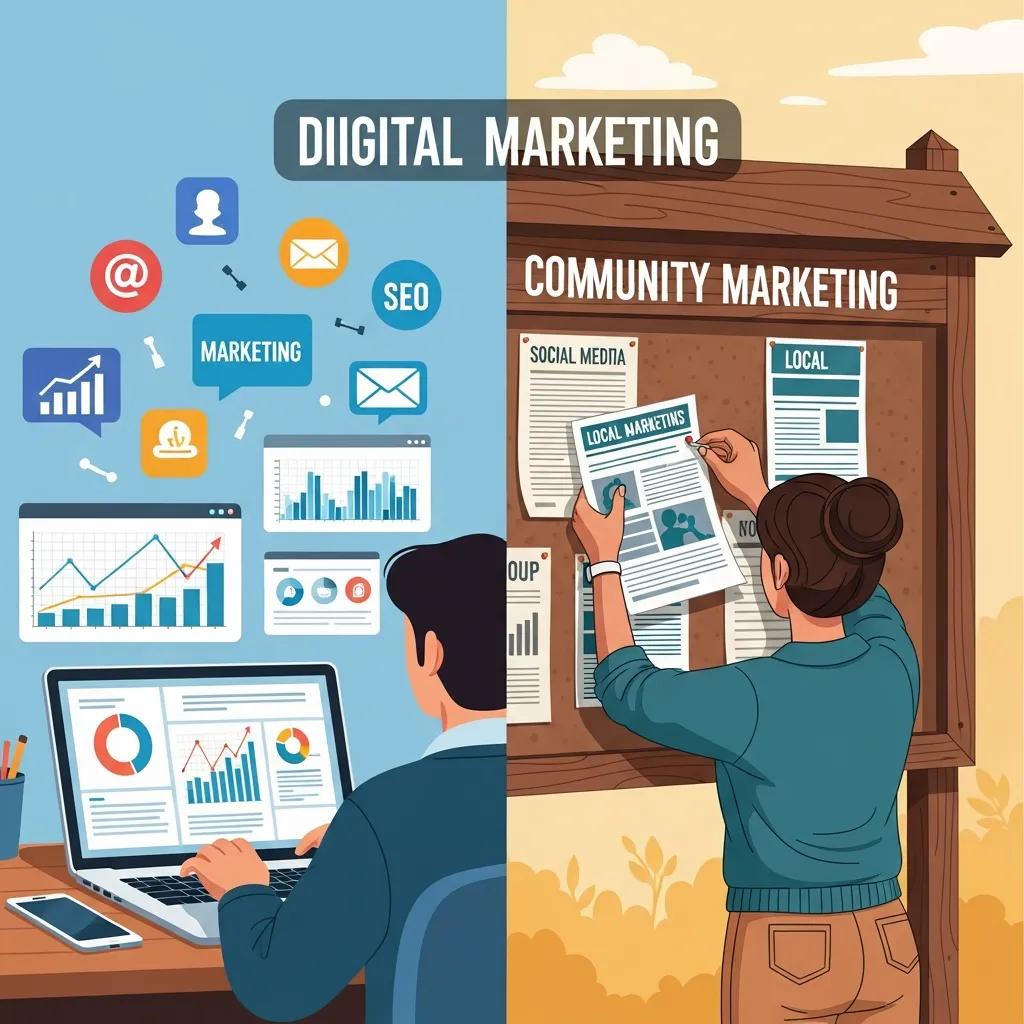
Digital channels can target by search intent, location or interests. For example, a local contractor can show a search ad to people seeking repairs nearby. Traditional marketing, such as billboards or local papers, reaches a wider audience and may build familiarity. However, its response can be harder to attribute to one placement. Start with the audience and the buying decision, then choose a channel you can afford to test.
Costs and Measurement in Traditional Marketing
Digital ads can be priced per click or per thousand impressions, and their dashboards show clicks and conversions quickly. By contrast, traditional marketing often involves production and placement fees agreed in advance. You can still measure offline response with dedicated phone numbers, offer codes and follow-up questions. Compare the total campaign cost and lead quality across channels; neither format guarantees a lower cost per lead.
The precision to track user interactions has been a defining advantage of digital marketing since the web began delivering analytics.
Measurability: Why Digital Often Outperforms Traditional Media
Since the mid-1990s, digital media’s ability to measure visitor interactions has given marketers insights they didn’t have before. Web analytics transformed how teams evaluate the effectiveness of marketing communications and optimize campaigns.
From web analytics to digital marketing optimization: Increasing the commercial value of digital analytics, 2012
Why Digital Marketing Often Benefits Small Businesses Most
Digital marketing combines precise targeting, cost control, measurable ROI, and scalability—features that align with common small-business goals like lead generation and local customer acquisition. Using SEO, PPC, social ads, and email, small businesses can reach prospects at each stage of the buying journey—from awareness to conversion—while tracking costs and adjusting campaigns quickly. The result: faster learning, lower cost-per-lead, and owned assets (website, email lists) that compound value over time.
Key digital benefits for small businesses include:
- Lead generation at scale: Targeted search and social campaigns deliver qualified inquiries straight into your sales funnel.
- Cost-efficiency: Precise targeting and real-time optimization reduce wasted spend and lower CPLs.
- Measurable ROI: Conversion tracking links digital spend to leads and revenue for data-driven decisions.
- Fast iteration: Campaigns can be tested and tuned weekly to accelerate performance gains.
- Compound value: SEO and content build ongoing organic traffic that lowers long-term acquisition costs.
Research also shows that using lead scoring and other optimizations can significantly improve ROI on digital campaigns.
Lead Scoring and ROI: Turning Data into Better Returns
Optimizing digital activities with lead-scoring frameworks—based on experimental and empirical cases using marketing tools—helps prioritize high-value prospects and improve ROI.
Optimization of digital marketing processes through modeling of lead-scoring, A Đorđević, 2019
Next, we break down channel-level use cases so you can operationalize these advantages.
| Channel | Cost Range | Best Use-Case | Measurability | Expected Lead Timeline |
|---|---|---|---|---|
| SEO | Moderate (investment over time) | Long-term organic visibility | High (organic traffic, conversions) | 3–6 months |
| PPC (Search) | Per-click pricing | Immediate demand capture | High (conversions, CPL) | Days–weeks |
| Social Ads | CPC/CPM | Audience building & remarketing | High (engagement, conversions) | Weeks |
| Email Marketing | Low per-send | Nurture and retention | High (open, CTR, conversions) | Immediate–ongoing |
This table clarifies which channels match small-business timelines and budgets. The sections below explain how digital channels drive engagement and why they can be more cost-effective than offline options.
How Does Digital Marketing Improve Lead Generation and Engagement?
Digital channels serve different stages of a customer’s journey. Search and helpful articles answer questions; paid ads can reach people ready to act. Then email or a clear landing page helps interested visitors take the next step. For example, a local service company could track appointment requests from its website. Start with a goal and a tracking method before adding more tools or channels.
Why Is Digital Often More Cost-Effective Than Traditional Methods?
Digital targeting can limit spending to selected audiences, and conversion tracking can show which ads generated inquiries. However, tracking is imperfect, and a lower cost per click does not always mean better customers. Owned resources such as useful pages and email lists may keep helping after a campaign ends. Test one offer at a time, measure lead quality and shift budget only when the evidence supports it.
What Are the Main Drawbacks of Traditional Marketing?
Traditional marketing can build local awareness, especially when customers notice a familiar sponsor or a useful printed guide. However, printing and placements require a budget before you see results. Response can also take longer to measure. Therefore, set a specific goal and use an offer code, dedicated landing page or phone number to understand whether a campaign helped.
Common trade-offs to consider:
- Higher production and placement costs: Creative, printing, and media buys can strain small budgets.
- Weaker measurability: Attribution is often modeled and less precise than digital tracking.
- Less precise targeting: Demographic/location-based targeting lacks the behavioral detail of online platforms.
These points show where traditional still makes sense and how to pair it with digital to improve measurement and reach.
How Does Traditional Marketing Affect Local Reach and Credibility?
Traditional marketing may help a business become familiar in its community. Sponsorships, direct mail and local press can reach people in places digital ads miss. Meanwhile, a dedicated page or phone number can help track responses. For a small business, test one local placement and compare the resulting inquiries with other channels before expanding the budget.
What Makes ROI and Flexibility Harder with Traditional Ads?
Measuring ROI for offline ads often relies on methods like marketing-mix modeling (MMM) or controlled experiments, which need more data and longer time windows to be reliable. Flexibility is limited: once a print run or radio spot is booked, changes are costly and slow, making it hard to iterate. Hybrid tactics—unique promo codes, dedicated landing pages, or short URLs tied to offline placements—can improve attribution and make comparisons with digital clearer. For many small businesses, test traditional elements in small, measurable pilots and scale only when you can validate the offline-to-online conversion path.
How to Combine Digital and Traditional Marketing
Start with an audience-first assessment: match channels to buyer behavior, budget, and goals. A simple decision framework helps prioritize: find where customers spend attention, estimate expected ROI per channel, and set aside a testing budget to validate assumptions. This three-step approach is actionable and repeatable, letting small businesses run low-risk experiments and scale the channels that deliver measurable leads and revenue.
- Define your customer profile and channels: Map demographics, online habits, and offline behaviors.
- Set measurable goals and a test budget: Rank channels by expected ROI and reserve funds for experiments.
- Measure, iterate, and scale: Track CPL and conversion rates, optimize, and shift spend to winners.
This checklist turns strategy into practical steps and leads into budget considerations for allocating spend.
What Should Drive Your Marketing Budget Allocation?

Set a budget using your customer value, sales cycle and available cash. Then decide what you need most: immediate inquiries, local awareness or repeat purchases. A service firm might test search and local listings, while a neighborhood shop might try an event and social posts. The U.S. Small Business Administration’s business guidance can help you frame a marketing plan. Review spending and results regularly, and reserve a modest amount for tests.
- Service professional (e.g., contractor): 50% search/PPC, 25% local SEO/content, 15% social ads, 10% testing/other.
- Retail/local store: 40% social ads/promotions, 30% local SEO/listings, 20% email/retention, 10% testing.
- Event-driven business: 35% event promotion (mix of digital/tactical), 35% social & search, 30% remarketing and retention.
These allocations are starting points; the next section shows practical ways to connect offline and online tactics for better results.
How Can Mixing Digital and Traditional Tactics Boost Growth?
A print ad can direct readers to a page with a clear offer. Similarly, a local event can lead people to a business listing or email sign-up. Use dedicated URLs, codes or phone numbers to see which offline efforts bring inquiries. Start with one pairing and compare its cost and lead quality. For a broader approach, see our custom marketing plan guide.
Quick integration tactics for immediate wins:
- Use QR codes and unique landing pages to turn offline interest into measurable digital leads.
- Combine local sponsorships with social promotion and email follow-up to extend campaign reach.
- Track offline calls and foot traffic with unique promo codes or dedicated tracking numbers.
These tactics convert traditional exposure into trackable, optimizable digital actions and create a feedback loop for smarter budget decisions.
How Does MarketMagnetix Media Group Help Small Businesses Grow Online?
Lead generation and action-oriented support
MarketMagnetix Media Group is a digital marketing partner for small businesses and service professionals. We focus on tactical, measurable services designed to generate leads and build sustainable online visibility. Our approach centers on tailored, ROI-driven strategies, clear communication and reporting, proactive optimization, and long-term partnerships that prioritize measurable results. Our services—SEO, web design, local map listing optimization, chatbot development, social media ads, Google PPC, and digital asset leasing—match the tactics described above and help businesses capture search demand, engage visitors, and convert prospects.
We also offer industry-specific strategies. For example, for industrial clients we provide dedicated Marketing for Manufacturers to address the particular lead-generation and visibility needs of that sector.
| Service | Primary Outcome | Typical Business Use |
|---|---|---|
| SEO | Organic visibility and lower CAC | Long-term lead generation for local services |
| Web design | Improved UX and conversion rates | Landing pages and appointment funnels |
| Local map listing optimization | Higher local discoverability | Service professionals with location-based demand |
| Chatbot development | Immediate lead capture and scheduling | Capture intent on-site, reduce friction |
| Social media ads | Audience building and promotions | Seasonal offers and brand engagement |
| Google PPC | Immediate demand capture | High-intent search conversions |
| Digital asset leasing | Short-term content/campaign assets | Rapid deployment without heavy production costs |
These mappings show how each service answers a specific tactical need. Below we explain how outcomes are measured and improved over time.
Which Specialized Services Does MarketMagnetix Offer for Small Businesses?
MarketMagnetix offers a focused suite of services—SEO, web design, local listing optimization, chatbot builds, social media ads, Google PPC, and digital asset leasing—aligned to the channels small businesses need for lead generation and engagement. Each service produces measurable outcomes: SEO brings recurring organic traffic, web design improves landing-page conversion, and chatbots capture leads immediately. Social ads and PPC enable fast demand capture and audience testing, while local listing work ensures customers find you nearby. Digital asset leasing gives access to ready-made campaigns when production budgets are limited. These definitions help business owners decide which investments map to which stages of the funnel and what results to expect.
How Does MarketMagnetix Measure and Improve ROI?
Start by recording a baseline for traffic, inquiries and sales. Next, test a campaign with a clear goal and a realistic budget. Review lead quality and cost alongside clicks or impressions, then adjust based on what the results show. For traditional marketing, include dedicated codes or contact routes where practical. Regular reporting helps explain decisions and identify what deserves further testing.
- Setup: Install tracking and establish baselines for key metrics.
- Test: Run controlled experiments to validate channel assumptions.
- Optimize: Reallocate spend to top-performing creatives and placements.
- Report: Share clear, regular reports with next-step recommendations.
These steps summarize a practical optimization cycle you can use to make marketing spend turn into predictable growth.
Frequently Asked Questions
What challenges do small businesses face when starting digital marketing?
Common hurdles include limited budgets, which can restrict tools and ad spend; a lack of in-house expertise, which can lead to ineffective campaigns; and time constraints, since owners juggle many responsibilities. The digital landscape also changes fast, so ongoing learning and small, focused tests help avoid wasted effort.
How should small businesses measure campaign success?
Set clear, measurable goals tied to business outcomes. Track KPIs like conversion rate, cost per lead (CPL), and return on ad spend (ROAS). Use tools such as Google Analytics and call tracking, review results regularly, and adjust tactics based on data—this keeps campaigns aligned with revenue goals.
What role does social media play for small businesses?
Social media builds awareness, drives engagement, and supports lead generation. It’s a place to share content, interact with customers, and run targeted ads. For many small businesses, social platforms are a cost-effective way to reach local audiences and promote offers.
How can businesses combine digital and traditional marketing effectively?
Use traditional channels to create awareness and digital channels to capture and measure response. Add QR codes, unique URLs, or promo codes to print materials to guide people to landing pages. Amplify offline events with social ads and email follow-up to extend reach and track performance.
What are low-cost digital strategies that work for small businesses?
Focus on organic social engagement, email marketing for retention, and SEO to attract long-term organic traffic. Produce helpful content—blogs, short videos, or FAQs—to earn attention without high production costs. Run tightly targeted PPC campaigns to capture immediate demand while controlling spend.
How important is customer feedback for marketing?
Customer feedback is essential. It reveals preferences, pain points, and opportunities to improve products and messaging. Use surveys, reviews, and social listening to refine offers and marketing. Acting on feedback increases loyalty and makes your campaigns more effective.
For further guidance, see the SBA business management resources. Also explore our guide on Achieve Business Goals with a Custom Marketing Plan.


