

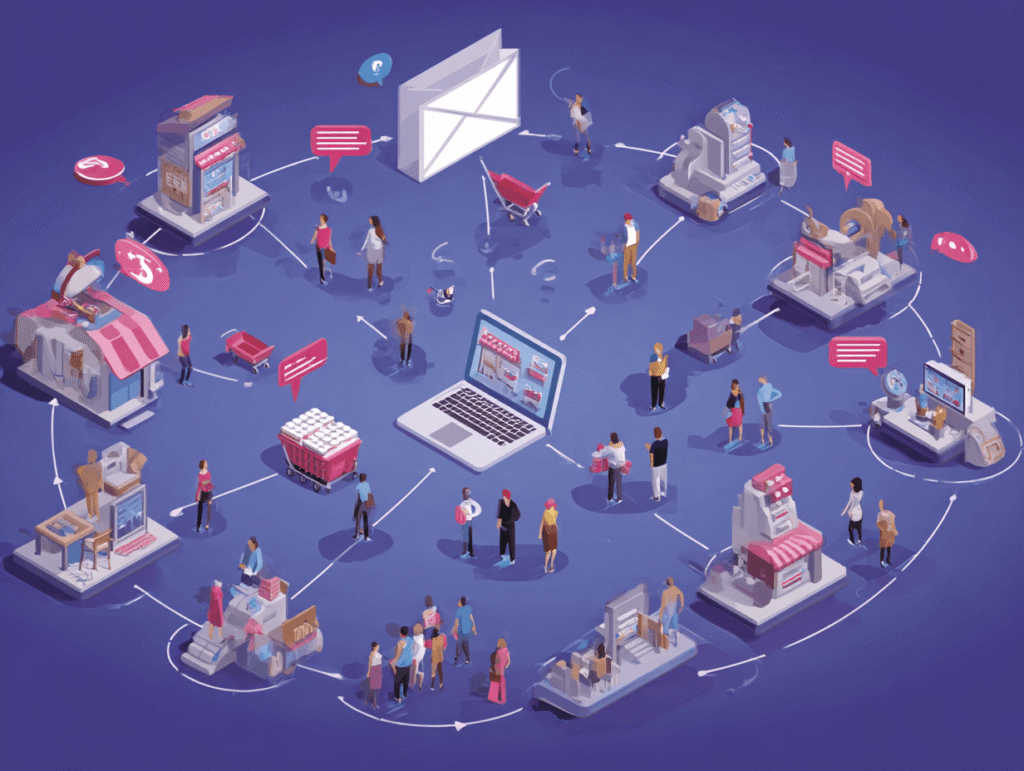
AI in omnichannel advertising is not simply the use of automation on several platforms. It is the coordinated use of data, models, creative assets, conversion signals and business rules across paid search, video, display, social, email, websites, apps and offline sales or service channels.
The opportunity is real, but so is the implementation risk. AI can allocate budget, match audiences, select creative combinations and predict which interactions are more likely to produce a defined outcome. It cannot decide whether the outcome is commercially useful unless the business supplies accurate goals, conversion values, audience inputs, creative standards and downstream feedback.
This guide explains how to structure omnichannel AI advertising without surrendering control of brand, data, customer experience or measurement.
What AI Changes in Omnichannel Advertising
Traditional multichannel campaigns are often planned and reported one platform at a time. Search has one budget and dashboard. Social has another. Email, website analytics, CRM activity and offline sales are reviewed separately. That structure makes execution manageable, but it can hide duplication, conflicting messages and weak handoffs between channels.
AI-powered advertising systems can optimize across larger combinations of signals and placements. For example, Google Performance Max uses AI across bidding, budgets, audiences, creative, attribution and multiple Google channels. Audience signals and first-party data can guide the system, but they do not function as absolute targeting restrictions. The platform still optimizes toward the conversion goals and values configured in the account.
The practical change is that campaign inputs become more important, not less. A weak conversion action, incomplete product or service data, generic creative or inaccurate revenue value can be amplified across channels faster than a human team could distribute it manually.
An Operating Model for AI in Omnichannel Advertising
1. Business Outcomes
Start with the decisions the campaign should support. Retail programs may distinguish new-customer purchases, repeat orders, store sales and margin. Lead-generation programs may distinguish raw inquiries, qualified leads, appointments, proposals and closed sales.
Do not optimize every campaign toward the easiest event to collect. A form submission is not automatically a qualified opportunity. A phone click is not a completed call. A booked appointment is not a sale. The conversion hierarchy should reflect meaningful progress through the actual commercial process.
2. First-Party Data and Consent
AI advertising performs better when it receives accurate, permitted signals from websites, apps, CRM systems, customer lists and offline transactions. That does not justify collecting every available data point. The business should define what it collects, why it collects it, how consent is handled, where the data is stored and which platforms may receive it.
Google supports first-party audience data, enhanced conversions and offline outcome imports. These systems require correct implementation, customer-data policy compliance and clear consent handling where applicable. Consent Mode controls tag behavior according to the visitor’s consent state; the presence of a banner alone does not prove that data collection follows the choice.
3. Audience and Intent Signals
Audience signals can help an advertising system understand the kinds of people, searches, behaviors or customer records associated with a campaign goal. Useful inputs may include prior customers, high-value accounts, website visitors, video viewers, relevant search themes or carefully defined custom segments.
Signals should be treated as guidance to the model, not as proof that every impression reached the intended buyer. Review search terms, placements, geographic delivery, demographic patterns and lead quality where the platform provides that visibility.
4. Creative and Message Governance
AI can assemble, resize, adapt or select among headlines, descriptions, images and videos. It still needs an approved source library. Create rules for:
- Brand names, terminology and visual identity
- Claims that require evidence or legal review
- Offers, prices, service areas and availability
- Industry-specific restrictions and disclaimers
- Landing-page alignment
- Assets that may or may not be automatically generated
Automated creative should not invent capabilities, testimonials, client relationships, product specifications or performance claims. Human review remains necessary when factual accuracy or regulatory exposure matters.
5. Activation and Measurement
Cross-channel optimization requires a shared measurement framework. The campaign platform may report attributed conversions, but the business should also review CRM outcomes, booked appointments, completed sales, margin, returns, cancellations and lead disposition.
Platform attribution is a decision model, not a complete reconstruction of every customer interaction. Compare platform reports with analytics, CRM records and financial outcomes, and document why the numbers differ.
AI in Omnichannel Advertising Across the Customer Journey
Demand Creation
Video, display and social systems can identify patterns associated with likely interest and select creative variations for different contexts. The main controls are audience inputs, exclusions, creative quality, frequency, geography and the definition of success.
Intent Capture
Search advertising uses query, landing-page, audience, device, location and auction signals to decide when and how much to bid. AI-powered matching may expand beyond the exact keywords or search themes supplied by the advertiser, so search-term review and negative controls remain important.
Consideration and Conversion
Websites and landing pages need consistent offers, fast mobile paths, clear calls to action and accurate tracking. AI cannot repair a broken form, confusing service architecture, unavailable product, slow response process or contradictory pricing.
Nurture and Retention
Email, CRM and customer-data systems can segment contacts, recommend content or identify likely next actions. Suppression rules are as important as activation rules. Customers should not continue receiving acquisition messages that conflict with their purchase, service or support status.
Offline and Sales Outcomes
For service businesses and complex B2B sales, the most important outcome often occurs after the website conversion. Connect qualified lead, appointment, proposal, purchase or revenue outcomes back to the advertising program where the systems and consent basis allow. This gives automated bidding a stronger signal than raw lead volume alone.
How to Measure AI in Omnichannel Advertising
A practical reporting model separates four levels:
- Delivery: spend, impressions, reach, frequency and channel distribution.
- Engagement: clicks, video engagement, landing-page sessions and assisted actions.
- Conversion: purchases, qualified inquiries, appointments or other primary actions.
- Commercial outcome: completed sales, margin, revenue, lifetime behavior or retained accounts where data is available.
Google now provides channel-performance reporting for Performance Max, including cost, clicks, conversions and value by channel. That visibility is useful, but individual-channel averages can still mislead when the campaign is optimizing across channels toward marginal return. Review both campaign-level results and channel diagnostics.
Use experiments when possible. An experiment can test whether adding or changing an AI-powered campaign creates incremental value rather than merely taking credit for conversions that would have occurred through another channel.
Common Failures of AI in Omnichannel Advertising
Optimizing Toward the Wrong Conversion
When low-quality form fills or short calls are treated as primary conversions, automation may find more of them. Use qualification stages and conversion values that reflect business utility.
Duplicate or Conflicting Tracking
The same event may fire through a website plugin, Google Tag Manager, a platform pixel and an integration. Validate each event from the user action through the platform report and CRM record.
Creative Volume Without Message Control
Producing more variations does not improve a weak offer. Build approved claims, source material, visual rules and landing-page requirements before increasing creative automation.
Channel Automation Without Customer-Journey Design
A campaign can deliver ads across many placements while the business still provides a fragmented experience. Review what happens after the click, after the form, after the call and after the sale.
First-Party Data Without Governance
Customer data should not be uploaded simply because a platform accepts it. Confirm ownership, permission, retention, security, suppression and policy requirements before activation.
Implementing AI in Omnichannel Advertising
- Map the customer journey. Identify the roles of search, social, video, email, website, sales and offline interactions.
- Define the conversion hierarchy. Separate diagnostic events from primary business outcomes.
- Audit tracking and consent. Confirm tags, duplicate events, consent states, campaign parameters and CRM handoffs.
- Prepare the data inputs. Document customer lists, audience signals, product or service data, conversion values and exclusions.
- Create an approved asset library. Supply accurate headlines, descriptions, images, video, offers and landing pages.
- Run a controlled pilot. Limit the first test to a clear objective, market and review period.
- Evaluate lead or sales quality. Compare platform conversions with downstream outcomes.
- Scale only after validation. Increase budgets, channels or automation when tracking and business feedback support the decision.
Limits of AI in Omnichannel Advertising
AI does not guarantee efficient spend, consistent cross-channel experiences, accurate attribution, qualified leads, sales or revenue. Results depend on demand, competition, budget, data quality, conversion definitions, creative, landing pages, pricing, inventory or service capacity, sales follow-up and platform behavior.
The accountable standard is not “full automation.” It is documented goals, controlled inputs, verified tracking, clear ownership, reviewable decisions and transparent reporting.
Frequently Asked Questions
What is AI in omnichannel advertising?
It is the use of machine-learning systems to coordinate audience selection, bidding, budget allocation, creative delivery and measurement across multiple advertising and customer channels.
Is omnichannel advertising the same as Performance Max?
No. Performance Max is one Google Ads campaign type that operates across Google inventory. A true omnichannel program may also include other advertising platforms, email, CRM, websites, apps, sales teams, stores and offline conversion data.
Does AI eliminate the need for channel strategy?
No. The business still needs to define each channel’s role, approved message, audience inputs, conversion goals, exclusions, budget constraints and success criteria.
What data should be connected first?
Start with reliable conversion events and downstream outcomes. For lead generation, that may include qualified leads, appointments, proposals and sales. Add first-party audience data only after confirming consent, policy and governance requirements.
How should an AI omnichannel campaign be evaluated?
Review delivery, engagement, platform conversions and verified commercial outcomes. Use experiments, lead-quality feedback and offline sales data where practical, and document attribution limitations.
Build a Foundation for AI in Omnichannel Advertising
MarketMagnetix Media Group connects campaign structure with Google Ads management, GA4 implementation and QA, landing-page and website development, and AI search visibility work. These are related capabilities, but they require different objectives and measurement methods.
Request an advertising and measurement review to identify conversion, tracking, data and channel-control gaps before expanding automation.


