


Website Redesign for Clearer Content and Better Leads
A website redesign should make your business easier to understand and contact. Start with customer needs, useful content, and clear navigation. Then review mobile usability, accessibility, and search performance as part of the same project.
Why a Website Redesign Matters for Small Businesses
A website redesign can improve how visitors find information and contact a business. Begin with user questions, mobile navigation, accessibility, and the current conversion path. Audit search pages and analytics before changing URLs or templates. After launch, monitor errors, qualified inquiries, and usability feedback. A redesign is most useful when it solves a documented problem rather than following a visual trend.
Today’s redesigns respond to three clear market forces:
- Mobile-first behavior: Most visitors arrive from phones, so responsive layouts and adaptive assets are essential to avoid losing traffic.
- Speed and performance: Page speed and a lean architecture shape user satisfaction and search visibility.
- Personalization and AI-driven experiences: Dynamic interfaces and tailored content raise expectations for relevance and clarity.
Seeing redesigns as strategic, not cosmetic, removes friction and creates a foundation for ongoing conversion-rate optimization and steady lead generation. If you’re ready to act, a free website audit and consultation will surface priority fixes and estimated ROI so you can take the next step with confidence.
How Website Design Shapes Credibility and Customer Trust
Design communicates professionalism and reliability through clear visual hierarchy, concise copy, and trust signals like credentials and secure forms. A consistent brand refresh makes navigation intuitive, highlights services, and reduces cognitive load — all of which boost micro‑conversions such as contact clicks and appointment bookings. Practically speaking, clean layouts, readable typography, and obvious contact points shorten decision paths and increase perceived authority for small businesses and service professionals. Trust badges, client logos, and up‑to‑date bios reduce intake friction and keep visitors from bouncing to a competitor.
Those credibility-focused choices also produce measurable wins: clearer CTAs and shorter forms typically lift conversion rates, and accessible content broadens your audience. These UX gains naturally connect to the technical and interaction trends that define successful redesigns today.
Which Trends Are Shaping Modern Website Redesigns?
Modern redesigns blend technical and UX advances that prioritize speed, relevance, and accessibility to match how people search and interact. Mobile-first frameworks, headless CMS options, and performance-first front-end patterns cut load times and let content reach users across channels. AI-driven personalization and automated SEO tools tune messaging and on‑page elements at scale to boost engagement and discoverability. Motion UI, microinteractions, and progressive disclosure make complex services feel approachable without clutter, while stronger focus on accessibility and security preserves trust and compliance.
Key takeaways from these trends include:
- Prioritize adaptive images and resource hints to improve both perceived and actual speed.
- Use structured data and semantic content to support an SEO‑friendly web architecture.
- Leverage personalization tools to surface the most relevant service pages and lead magnets.
Applied thoughtfully, these trends help you convert more of your existing traffic and capture higher‑intent visitors, setting the stage for long‑term growth.
Our Comprehensive Website Redesign Process at MarketMagnetix
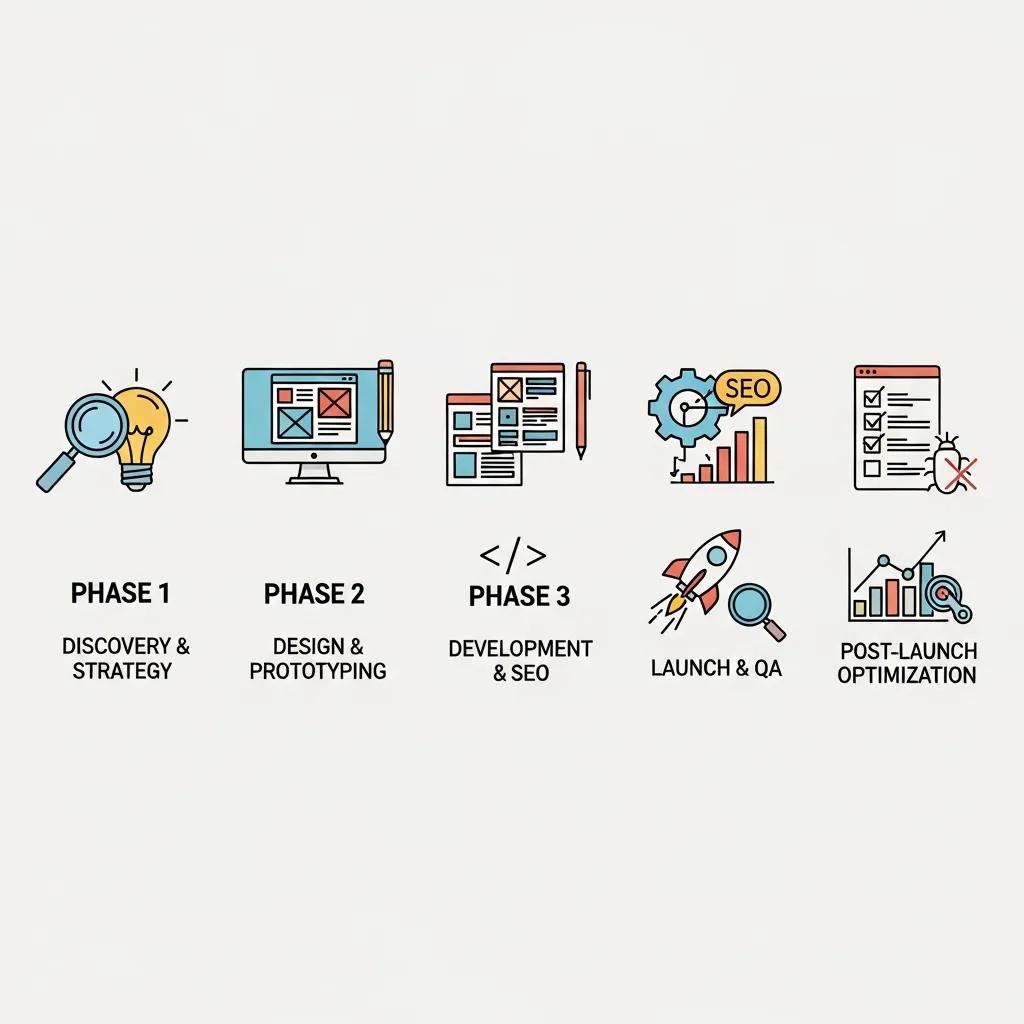
We use a staged redesign process that aligns stakeholder priorities with user needs and technical execution, giving you a measurable roadmap from discovery through post‑launch optimization. The method combines discovery, UX/UI design and testing, development with SEO baked in, and an optimization cadence that turns initial traffic lifts into sustained lead generation. Every decision ties back to KPIs — organic visibility, conversion rate, and average lead value — so the redesign becomes an investment, not a one‑off expense. Clear deliverables and timelines keep expectations realistic and progress transparent.
Our process is organized into five phases:
- Discovery & Strategy: Goal mapping, analytics audit, competitor review, and KPI definition.
- Design & Prototyping: Wireframes, visual design, and usability testing to validate key flows.
- Development & SEO: Front-end and back-end implementation, performance tuning, and structured data.
- Launch & QA: Staged rollout, crawlability checks, and live monitoring to ensure stability.
- Post-launch Optimization: Ongoing CRO, content refinement, and technical improvements.
Each phase produces concrete outputs — sitemaps, personas, prototypes, and tracking plans — that tie design work directly to lead‑generation outcomes and prepare the site for continuous improvement.
How Discovery and Strategy Align Business Goals with User Needs
Discovery blends stakeholder interviews, analytics review, and competitor benchmarking to uncover high‑impact opportunities and define priority user journeys. Stakeholder input clarifies business objectives and conversion targets while session data reveals real user behavior and drop‑off points to fix. Typical discovery outputs include personas, a prioritized sitemap, KPI definitions, and a tracking plan so every design choice can be measured against business results. This focus reduces wasted effort by directing design and content where they’ll actually move the needle.
A practical discovery checklist helps teams prepare for productive strategy sessions:
- Inventory of existing content and analytics access.
- Competitive landscape and local search benchmarks.
- Business goals, target KPIs, and audience segments.
Those artifacts feed directly into design decisions that improve usability and conversion, making the handoff from strategy to design efficient and measurable.
The Role of UX/UI Design in Clear, Intuitive Experiences
UX/UI design defines how visitors move from discovery to conversion, using wireframes and prototypes to validate assumptions before development begins. Wireframes clarify information architecture and CTA placement; high‑fidelity UI designs lock in brand consistency and accessibility standards that build trust and legibility. Usability testing with representative users uncovers friction early so we can iterate quickly and improve form completion and reduce abandonment. Choices like simplified contact flows, progressive disclosure for complex services, and mobile‑first navigation directly support conversion goals.
Design deliverables — clickable prototypes, accessibility checklists, and CRO hypotheses — ensure development implements effective interactions and that every UI decision links to measurable user‑behavior improvements. They also streamline testing and post‑launch optimization.
Core Features of MarketMagnetix’s Professional Website Redesign Services
Our redesigns combine mobile‑first responsive frameworks, SEO‑friendly architecture, conversion‑focused templates, secure development, and analytics‑driven optimization to deliver faster, more discoverable, higher‑converting sites. These features work together: responsive design preserves usability across devices, technical SEO ensures crawlability and structured data, and ongoing CRO refines the site based on real user signals. The result: improved organic traffic, higher mobile conversion rates, and clearer lead attribution. Use the feature‑to‑outcome mapping below to prioritize investment.
The following table maps core features to attributes and expected outcomes:
| Feature | Attribute | Expected Outcome |
|---|---|---|
| Responsive Design | Mobile‑first layouts + adaptive images | +11% mobile conversion |
| SEO Integration | Technical fixes + structured data | +25% organic visibility |
| Conversion Optimization | CTA placement + simplified forms | +18% contact form rate |
| Security & Performance | HTTPS, caching, optimized assets | Reduced bounce, better search ranking |
How Responsive Design Boosts Mobile and Global Engagement

Responsive design adapts layouts, images, and interactions so content stays usable and fast on phones, tablets, and desktops. Mobile‑first development prioritizes essential content and streamlined navigation, lowering cognitive load and speeding task completion for users searching locally or on the go. Techniques like adaptive image delivery, critical CSS, and touch‑friendly controls improve perceived and real speed, lifting engagement and mobile conversion rates. For businesses, those gains mean more qualified leads from organic and paid channels because visitors can complete actions quickly.
Responsive design also simplifies internationalization and localized content without multiple codebases, improving maintainability and long‑term SEO.
How SEO Optimization Improves Performance and Lead Generation
SEO optimization combines on‑page content strategy, technical fixes, structured data, and local SEO to increase visibility for the right queries and drive qualified organic traffic that converts. Technical tasks — speed tuning, canonicalization, and schema markup — help search engines crawl and understand your site, which affects rankings. On‑page work aligns content with user intent and target keywords, creating pages that answer high‑value queries and convert through focused CTAs and lead magnets. Local SEO and map‑listing work help service businesses show up for nearby searches, increasing appointment bookings and consults.
A disciplined SEO program also sets up tracking and attribution so organic leads are credited correctly, enabling data‑driven investment decisions.
How Redesigns Serve Specific Service Professionals and Industries
Redesigns should reflect industry priorities — legal sites emphasize trust and lead capture, medical practices focus on accessibility and appointment flows, and B2B or manufacturing sites prioritize technical content and lead qualification. Tailored content structures, compliance‑aware design, and conversion paths that match user intent increase relevance and lead quality. Addressing these differences during strategy creates service pages and funnels that speak directly to buyer needs, from consult forms for attorneys to telehealth booking for clinicians. The table below maps industries to design priorities and typical outcomes.
| Industry | Key Design / Function Priorities | Example Outcomes |
|---|---|---|
| Law Firm | Trust signals, consult forms, attorney profiles | Increased consult requests |
| Medical Practice | Appointment UX, accessibility, provider bios | Higher appointment bookings |
| Service Business | Local SEO, lead capture, case studies | Improved local lead quality |
Benefits of a Law Firm Website Redesign for Client Acquisition
For law firms, a redesign emphasizes trust elements — attorney bios, testimonials, case studies, and clear consult CTAs — so visitors can quickly assess competence and act. Streamlined intake forms and scheduled‑consultation flows reduce friction and speed handoff to intake teams, while practice‑area pages and local SEO increase visibility for high‑intent searches. Clear, helpful content that answers common legal questions demonstrates expertise and boosts organic discoverability, resulting in measurable increases in consult requests and qualified leads. Structured data for attorneys and services helps search engines present richer results.
These targeted changes align site structure and content with how prospective clients search, making client acquisition more efficient.
How a Medical Practice Redesign Builds Patient Trust and Accessibility
Medical redesigns prioritize easy appointment scheduling, clear provider information, telehealth integration, and accessibility so patients can find care and book visits with confidence. Patient‑centered UX removes barriers with quick appointment flows, plain‑language insurance and billing info, and clear service descriptions. Accessibility measures — contrast, keyboard navigation, and readable forms — support compliance and broaden the patient base. Displaying credentials, patient resources, and privacy‑forward messaging builds trust and drives appointment bookings and telehealth sign‑ups.
Together, these features create a patient journey optimized for both new and returning visitors, improving appointment conversion and satisfaction.
Why Partner with MarketMagnetix for Your Website Redesign?
Working with MarketMagnetix Media Group means a results‑first approach: tailored strategies, proactive optimization, and transparent communication that turn redesigns into reliable lead engines. We treat redesigns as the start of a partnership, with ongoing performance work, local map optimization, and AI‑enabled SEO tools to protect and grow visibility after launch. Clients can expect a consultative process that ties design trade‑offs to KPIs so investments align with revenue outcomes instead of vanity metrics. Our playbook reduces procurement friction by delivering clear deliverables, measurement plans, and an optimization cadence you can rely on.
The table below outlines core offerings and the business benefits they enable:
| Offering | What’s Included | Business Benefit |
|---|---|---|
| Free Website Audit | Site performance baseline and SEO gap analysis | Identifies conversion barriers |
| Tailored Redesign | UX/UI, responsive build, SEO integration | Improves lead conversion and visibility |
| Post-launch Optimization | Monthly performance reviews + CRO tests | Sustains and grows lead volume |
How ROI-Driven Strategies and Proactive Optimization Create Long-Term Value
We begin by defining measurable KPIs — leads, conversion rate, and lifetime value — then prioritize redesign choices that move those metrics. Proactive optimization uses analytics and A/B testing to iterate on pages, CTAs, and content so performance improves over time instead of slipping after launch. A typical cadence includes weekly monitoring, monthly test cycles, and quarterly strategy reviews to adapt to new priorities or trends. This discipline turns initial traffic gains into predictable increases in qualified leads and helps justify continued marketing investment.
Transparent measurement and reporting let stakeholders see revenue impact from redesign work and prioritize future enhancements based on real lift.
What Support and Communication to Expect During the Redesign
You’ll get a structured onboarding, a milestone‑driven project plan, and regular reports that keep stakeholders aligned at every step. Onboarding clarifies goals, grants analytics access, and confirms timelines; milestone check‑ins during design and development maintain momentum and surface issues early. Reporting typically includes weekly build updates, clickable prototypes for review, and monthly performance reports after launch that connect metrics to business goals. A dedicated point of contact keeps communication clear and decisions documented, reducing delays and improving transparency.
This support model preserves momentum and gives post‑launch optimization the data and alignment it needs to work.
How to Get Started with a Professional Website Redesign
Getting started is simple: request a diagnostic audit, review a tailored proposal, and schedule a kickoff that aligns timing with business priorities. The audit creates a performance baseline and flags SEO and conversion blockers; the proposal outlines scope and expected outcomes; the kickoff confirms deliverables and the optimization cadence. Sharing key inputs — analytics access, business goals, and priority pages — speeds discovery and shortens time‑to‑value. Clear steps reduce procurement friction and move teams from assessment to measurable improvements faster.
Follow these steps to begin:
- Request a free website audit and baseline performance review.
- Share analytics access and business goals for a tailored proposal.
- Approve scope and schedule a project kickoff to begin work.
Completing these items ensures a focused discovery phase and a clear path to a modern website that supports lead generation and brand credibility.
What’s Included in the Free Website Audit and Consultation?
Our free audit delivers a performance and SEO baseline, identifies conversion blockers, and provides prioritized recommendations for quick, high‑impact fixes. You’ll get speed and mobile metrics, an inventory of technical SEO issues, a shortlist of UX improvements, and an estimate of potential impact on leads or rankings. The consultation translates those findings into recommended next steps, timelines, and expected ROI so decision‑makers can compare options. A prioritized action plan helps teams decide whether to pursue a phased redesign or targeted fixes to capture early wins.
This audit‑first approach reduces risk and gives you a measurable starting point for redesign investments.
How to Contact MarketMagnetix for a Tailored Redesign
Before your consultation, gather analytics access, a short list of primary business goals, and an estimated budget range so the initial conversation is focused and productive. We’ll review the audit and present a proposal that aligns scope with prioritized KPIs like organic traffic growth and conversion lift. Prospects who prepare these materials speed the discovery process and get more accurate timelines and estimates during the first meeting. Expect a consultative exchange that prioritizes ROI, clear communication, and a partnership‑minded optimization plan that continues after launch.
A simple prep checklist speeds the process:
- Provide analytics and examples of top‑performing pages.
- Define primary goals and target KPIs.
- Share brand assets or compliance requirements relevant to the redesign.
Preparing these items enables a focused audit and a proposal that maps directly to measurable business outcomes.
Frequently Asked Questions
1. What signs show a website needs a redesign?
Look for high bounce rates, declining conversions, an outdated visual style, or poor mobile behavior. If your site isn’t optimized for SEO or fails current accessibility checks, it’s likely underperforming. Regularly reviewing analytics and user feedback reveals the biggest problems so you can prioritize a redesign that meets audience expectations and industry standards.
2. How should businesses measure redesign success?
Measure success with KPIs set before the project: organic traffic, conversion rate, reduced bounce, time on site, and pages per session. Track leads, appointment bookings, and customer feedback to gauge satisfaction. Using analytics and attribution ensures you can see which changes drive real business value.
3. What role does content play in a redesign?
Content is central: it drives SEO, informs visitors, and guides conversions. During a redesign, audit existing content for relevance and clarity, align pages with user intent, and apply SEO best practices like keyword alignment and structured data. Well‑structured, audience‑focused content turns visits into leads.
4. How often should a business redesign its website?
There’s no fixed rule, but a refresh every 2–3 years is common, sooner if branding, services, or core technology change. Regular updates keep pace with user expectations, design trends, and SEO shifts. If analytics show falling performance, reevaluate sooner.
5. What common pitfalls should teams avoid during a redesign?
Avoid ignoring user needs, skipping stakeholder alignment, and failing to set measurable goals. Overcomplicated designs and poor mobile planning also hurt results. Thorough testing before launch and a collaborative process that includes user feedback will reduce risk and improve outcomes.
6. How do you ensure a redesign matches brand identity?
Start by defining brand values, voice, and visual elements, and use those as the foundation for design decisions. Maintain consistent color, typography, and imagery, involve stakeholders early, and document a style guide to keep the experience cohesive across pages.
7. Why is ongoing optimization important after launch?
Post‑launch optimization lets you respond to changing user behavior, new technology, and SEO updates. Continuous monitoring, A/B testing, and iterative content work keep performance improving rather than decaying. This approach ensures the site stays aligned with business goals and continues to generate leads over time.
For further guidance, see the SBA business management resources. Also explore our guide on Optimize Page Load Time for a Superior User Experience.


