


Content Repurposing: Practical Strategies to Maximize Your Reach Across Channels
Content repurposing adapts useful material for a new format or audience. For example, a detailed article can support a short video, an email and a sales resource. Choose formats that fit the reader’s needs. Then track whether each version helps.
Why Should Small Businesses Repurpose Content for Multi-Channel Marketing?
Content repurposing gives a useful idea a second format for a different setting. For example, a case study can become a short video and a sales handout. First, identify the evidence and message the original piece supports. Then adapt it for each audience instead of copying it word for word. Finally, track whether the new format leads to useful inquiries. This process can save effort when the source material is accurate and current.
Small businesses see measurable results when they focus on converting existing traffic into leads with optimized CTAs and channel-appropriate formats. The next section outlines the SEO and engagement wins you can track to prove impact.
What Are the Key Benefits of Content Repurposing for SEO and Engagement?
Repurposing can support search when a new page answers a distinct question. However, copying the same text into several indexable pages adds little value. First, choose the reader’s need for each format. Then add original examples or practical details that fit that need. Link related pages where the connection helps. For a quality check, use Google’s people-first content guidance before publishing.
- Increased Indexable Content: More pages and variations widen keyword coverage.
- Improved Topical Authority: Clustered pieces show expertise to search engines.
- Higher Engagement: Format-tailored assets increase time on site and watch time.
These SEO and engagement benefits create the case for distributing content across channels deliberately—the next section explains how.
How Does Multi-Channel Distribution Expand Audience Reach and Lead Generation?
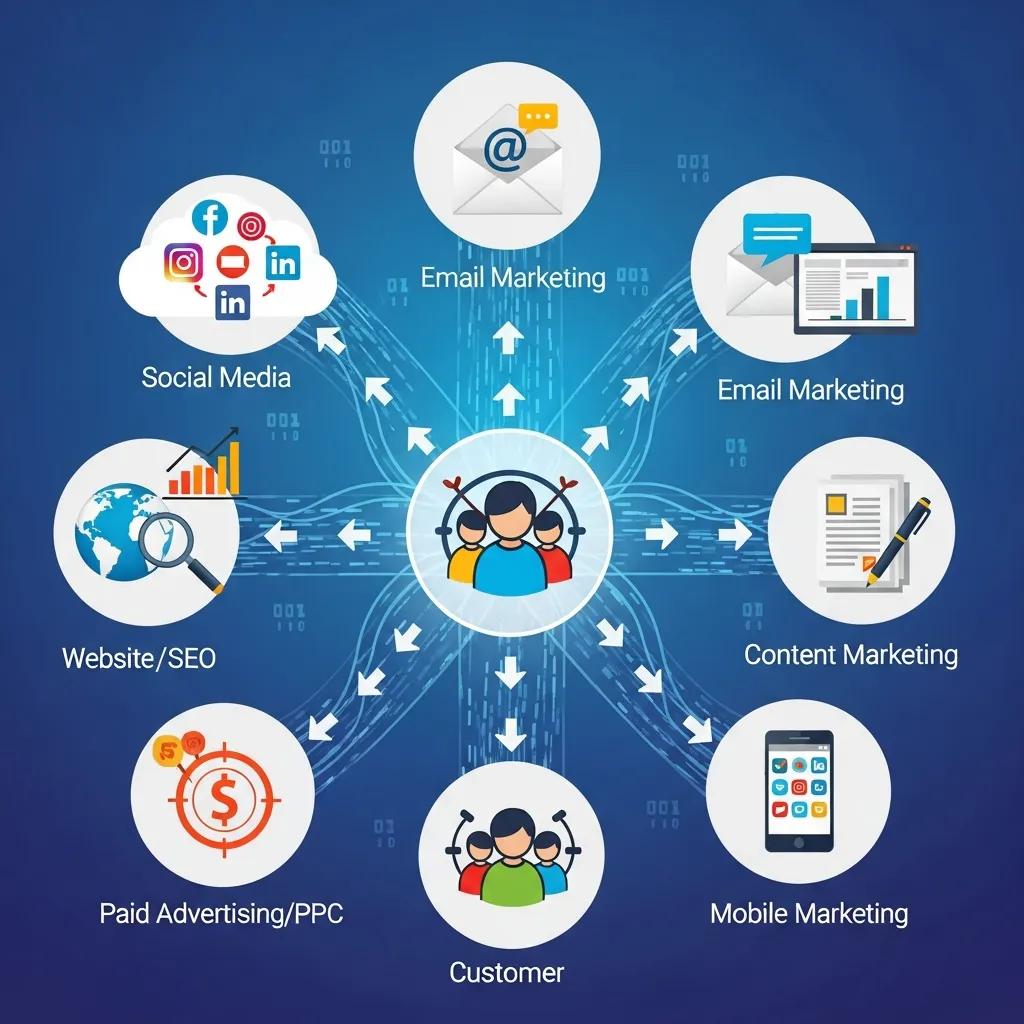
Different channels suit different ways of reading or watching. For example, a detailed article can answer a search question, while a short video can demonstrate one step. An email can then point interested readers to the full resource. Keep the main facts consistent, but adapt the opening and call to action. Finally, compare qualified inquiries from each channel before increasing production.
A simple channel-to-conversion mapping makes it easier to prioritize formats that feed your core funnel goals.
Below is a quick overview of how channels behave and which formats work best—use this to choose formats before building your distribution schedule.
Choosing Channels and Formats
| Channel | Typical Audience Behavior | Best Formats | Measure to Review |
|---|---|---|---|
| Website / Blog | Research-focused, high intent | Long-form articles, pillar pages, downloadable guides | Qualified inquiries and organic visits |
| Permissioned, repeat engagement | Nurture sequences, summaries, exclusive offers | Clicks and qualified replies | |
| Visual, discovery-driven | Short videos, carousels, stories | Engagement and referral visits | |
| TikTok | Rapid consumption, viral potential | Short-form vertical clips, trends | Watch time and referral visits |
| Professional, B2B intent | Articles, case studies, thought leadership videos | Qualified inquiries and sales follow-up |
This comparison helps you decide where to publish first and what engagement to expect before production begins.
MarketMagnetix Media Group turns repurposing into measurable lead programs by aligning formats to channels and reporting on results. Our services—AI SEO, social media ads, chatbots, Google PPC, web design, local listings, and digital asset leasing—are designed to convert repurposed content into leads through proactive optimization and clear reporting. If your team needs to scale without adding headcount, we provide hands-on execution and regular performance updates to keep improving results.
How to Develop an Effective Multi-Channel Content Repurposing Strategy?
Start by reviewing existing content for accuracy and useful results. Next, choose a strong source piece and decide which customer question each new format will answer. A content strategy can help prioritize those questions. Then schedule editing, design and review steps. Finally, assign a measure such as qualified inquiries or downloads to each piece.
Below is a step-by-step process small teams can use right away to turn one pillar post into distributed assets that feed every stage of the funnel.
- Audit & Prioritize (2–4 hours): Identify pillar pieces by traffic, backlinks, and lead performance.
- Outline Transformations (1–2 hours per asset): Define formats per channel—blog excerpt, 60s video, infographic, email series.
- Create Templates (3–6 hours): Build reusable templates for captions, thumbnails, and CTAs to speed production.
- Batch Production (varies): Record, transcribe, and edit in batches to reduce setup time and keep consistency.
- Schedule & Promote (1–2 hours): Use a content calendar to stagger publication and amplify with paid social as needed.
- Measure & Iterate (ongoing): Track KPIs and run quick tests to refine formats and CTAs.
Follow this workflow to turn a single asset into a multi-week distribution plan that sustains lead flow and lowers cost per conversion. The next section covers which formats work best where.
Which Content Formats Work Best Across Different Platforms?
Pick formats that balance depth and shareability: long-form articles and guides capture search intent and build authority, while short videos and carousels win attention on discovery platforms. Keep the long-form core intact for SEO, and extract concise derivatives for social and email. For example, an 1,800-word guide can become a 300-word summary, five social snippets, a 60-second video, and an email sequence—each with its own CTA.
- Long-form articles and pillar pages perform best for search and LinkedIn.
- Short-form videos and reels drive discovery on TikTok and Instagram.
- Infographics and carousels summarize technical or data-heavy assets effectively.
This format mapping helps you convert content without losing search value. Next, we’ll look at ideas tailored to service professionals.
What Are Industry-Specific Content Repurposing Ideas for Service Professionals?
Repurposing ideas depend on the industry because buyer questions and compliance needs shape what you can publish. For service professionals, high-value assets are typically educational and trust-building—case studies, process walkthroughs, FAQs, and before/after visuals. Those can be repurposed into how-to videos, downloadable checklists, and targeted email sequences. Align repurposing with the client journey so assets drive conversion steps, not just impressions.
The sections below offer concrete, low-effort, high-impact ideas by vertical plus templates you can use with minimal editing.
How Can Manufacturers and Contractors Repurpose Technical Content?
Manufacturers and contractors can convert technical specs, project documents, and installation guides into marketing collateral that proves capability and drives leads. Turn specs into infographics and spec sheets, record short on-site demo videos for social reels, and split project reports into a blog series to capture long-tail searches. These outputs usually need modest editing and designer input but give sales-ready assets that help qualify leads.
- Infographic from Specs: Visualize key performance metrics to support sales conversations.
- Project Reel: Short before/after videos for social proof and Instagram/TikTok distribution.
- Downloadable Case Study: Turn a project report into a gated PDF with a contact CTA.
These tactics balance technical accuracy with audience-friendly formats and lead into compliant approaches for regulated fields.
What Are Effective Repurposing Techniques for Law Firms and Medical Practitioners?
Law and medical practices must balance helpful content with confidentiality and regulatory rules. Favor anonymized case summaries, educational explainers, and evergreen FAQs that answer common client or patient questions. Convert long client guides into short explainer videos, build FAQ pages from intake questions, and create downloadable checklists that simplify complex processes—always anonymize case details and run content by compliance reviewers. These formats build trust and attract high-intent searchers while protecting privacy.
- Anonymized Case Summaries: Share outcomes and reasoning without identifying details.
- Educational Clips: Short videos that explain common procedures or legal steps.
- Evergreen FAQ Pages: Optimized for search to drive organic leads and reduce intake friction.
Below is a compact industry-to-output mapping with estimated effort and recommended deliverables for common service verticals.
| Industry | Repurposing Format | Example Output | Estimated Effort (hrs) |
|---|---|---|---|
| Manufacturer / Contractor | Visual case studies & reels | Infographic + 60s project reel | 4–8 |
| Law Firm | Anonymized summaries & FAQs | Blog series + FAQ page | 3–6 |
| Medical Practitioners | Educational explainers & newsletters | Short explainer video + patient guide | 4–7 |
| Service Professionals (e.g., consultants) | Webinar clips & templates | Downloadable template + social clips | 5–9 |
These mappings help teams pick outputs that match resources and lead goals. Next, we explain how AI tools can speed many of these tasks.
How Can AI Tools Enhance Content Repurposing Efficiency for Small Businesses?

AI speeds repurposing by automating transcription, summarization, variant generation, and basic editing. The model is task substitution: AI handles repetitive steps—transcribing interviews, drafting captions, producing summaries—while human editors add brand voice and compliance checks. That hybrid approach raises publishing frequency and cuts per-asset production time, improving the ROI of content programs for teams with limited bandwidth.
Here’s a concise list of AI benefits and the tool types that support them.
- Transcription & Chapters: Converts long audio/video into editable text and chapter markers.
- Summarization & Variant Generation: Produces social captions, meta descriptions, and short articles from longer texts.
- Automated Editing & Templates: Speeds video/audio edits and enforces brand styles.
- Analytics & Optimization: Suggests keywords and headline variants for better reach.
Which AI-Powered Tools Streamline Multi-Channel Content Transformation?
AI tools fall into categories—transcription, summarization, video editing, and SEO automation—each matching common repurposing tasks and saving predictable time. Transcription tools create scripts for captions, summarizers produce email and social copy, and AI editors batch short clips and thumbnails. Keep human review in the loop for tone, accuracy, and compliance to avoid mistakes that damage credibility.
| Tool Category | Core Capability | Ideal Repurposing Use-Case |
|---|---|---|
| Transcription & Chapters | Accurate speech-to-text | Create captions, blog drafts, and chapter markers |
| Summarization & Copygen | Condense long text into variants | Generate social captions and email snippets |
| Video Auto-Editor | Clip extraction & auto-cropping | Produce short-form social videos quickly |
| SEO Automation (AI SEO) | On-page optimization suggestions | Improve discoverability of repurposed assets |
Practical note: MarketMagnetix Media Group includes AI SEO and automation services that put many of these categories into operational workflows—automation for on-page optimization and scaling helps small teams stay consistent and discoverable without hiring a big in-house staff. If bandwidth is tight, outsourcing these steps is a practical option.
How Does AI Save Time and Improve Content Marketing ROI?
AI tools can help transcribe a video or draft a summary. However, they may omit context or invent details. First, compare the output with the original source. Then edit for the new audience and check names, figures and claims. A person should approve the final piece before publication. Measure time saved on your own workflow instead of assuming a fixed production gain.
- Time Saved: Typical savings of 50–75% on editing and captioning tasks.
- Frequency Increase: More frequent publishing builds topical authority.
- Cost Efficiency: Lower marginal cost per asset increases capacity for channel testing.
These efficiency gains make AI a practical accelerator for repurposing, while human editorial control remains essential for voice and compliance.
How to Measure the Success and ROI of Your Repurposed Content?
Measure repurposed content by choosing KPIs that match your distribution goals—organic visibility for search, watch time for video, and conversion metrics for gated assets—and tracking them across channels. The approach is attribution: assign each repurposed asset a primary KPI and a secondary conversion metric, then compare baseline performance before repurposing to results after distribution. Set benchmarks and run controlled tests to see which formats and CTAs generate the best leads.
The next section lists the KPIs and example benchmarks to help you evaluate repurposing performance.
What Key Performance Indicators Should You Track for Content Repurposing?
Track KPIs that reflect both discovery and conversion so you optimize for reach and lead quality. Typical indicators include search impressions and rankings, watch time and retention for videos, CTR for social posts, and lead conversion rate for gated offers. Pair platform metrics with lead-quality signals—demo requests or qualified meetings—to measure real business impact rather than vanity metrics.
- Impressions / Organic Visibility: Benchmark: month-over-month growth of 10–30% after new repurposed assets.
- CTR: Benchmark: 2–5% on social; higher on email.
- Time on Page / Watch Time: Benchmark: 20–60 seconds for social clips; 2+ minutes for long-form content.
- Conversion Rate (lead capture): Benchmark: 1–5% depending on channel and CTA.
Use these KPIs to focus on formats that deliver the best mix of reach and qualified leads. The next section describes an optimization loop to improve outcomes over time.
How to Use Analytics to Optimize Future Content Repurposing Efforts?
Optimization is a test-measure-learn loop: form a hypothesis about one variable (CTA, thumbnail, length), run a small A/B test, measure your KPIs, and iterate. Use analytics platforms and UTM-tagged links to attribute performance to specific repurposed pieces and run cohort analysis to track lead quality over time. Record test results and update the content calendar to scale winners and pause underperformers.
- Step 1: Hypothesize: Choose one variable (CTA, thumbnail, length).
- Step 2: Test: Run a small, controlled experiment on a single channel.
- Step 3: Measure & Scale: If the test improves KPIs, roll it out across channels.
Applying this disciplined loop turns ad-hoc repurposing into a repeatable improvement process that increases content efficiency quarter over quarter.
What Are the Best Practices for Integrating Content Repurposing into Your Digital Marketing?
A useful repurposing process protects accuracy across formats. First, keep the source facts and approved claims in one place. Then give an editor responsibility for checking each adaptation. Add relevant structured data only when it describes content visible on the page. Finally, review older versions when the facts change. This keeps the series consistent for readers.
How to Use Semantic SEO and Structured Data to Boost Content Visibility?
Semantic SEO improves discoverability by mapping primary entities and their relationships in your content, then applying relevant schema types—Article, HowTo, FAQ—to increase the chance of rich results and featured snippets. Make relationships explicit (Entity → Relationship → Entity), and validate structured data with schema checkers. Well-marked repurposed assets signal both search engines and AI models, improving snippet eligibility and long-term visibility.
- Apply Article/HowTo/FAQ schema where appropriate to help rich result eligibility.
- Use entity-focused headings and descriptive anchors to clarify relationships.
- Validate structured data with common schema checkers before publishing.
These semantic steps preserve search value for repurposed assets and support internal linking strategies that protect authority.
What Internal Linking and Anchor Text Strategies Enhance Multi-Channel Reach?
Link related articles when they help a reader move to the next question. For example, a short explainer may point to a detailed guide or a relevant service page. Use descriptive link text that says what the destination covers. Then review whether the path helps people find a useful answer. Avoid repeating identical anchor text merely to target a keyword.
Best practice list:
- Use descriptive anchors that include the target entity and intent.
- Link cluster pieces to the pillar and to conversion pages selectively.
- Avoid excessive exact-match anchors to reduce over-optimization risk.
These linking rules protect SEO value while enabling discovery and lead flow across channels.
If you’re ready to scale a repurposing program, MarketMagnetix Media Group can translate strategy into execution. Our offerings—AI SEO, chatbots, social ads, Google PPC, web design, local listings, and digital asset leasing—support end-to-end implementation with dedicated reporting and ongoing optimization focused on lead generation for small businesses and service professionals. Contact MarketMagnetix Media Group to build a tailored repurposing plan that combines semantic SEO, automation, and distribution to maximize your existing content assets.
Frequently Asked Questions
1. What types of content are best suited for repurposing?
Pick high-performing, evergreen pieces—blog posts, case studies, and how-to guides are the best candidates. They repurpose well into infographics, videos, social snippets, and downloadable assets. Focus on content that already resonates with your audience and can be adapted to different platforms without losing its core message.
2. How can I ensure my repurposed content remains relevant?
Keep content fresh by auditing assets regularly and updating them with new data, examples, or feedback. Consider seasonal relevance and industry trends when planning repurposing. Regular updates and small edits keep repurposed pieces accurate and engaging for your audience.
3. What tools can help streamline the content repurposing process?
Use AI platforms for transcription, summarization, and basic editing to cut time. Design and scheduling tools like Canva and Hootsuite speed visual production and distribution, while analytics platforms (Google Analytics, social insights) track results. Combining these tools into a repeatable workflow saves effort and keeps quality consistent.
Planning and Measuring Repurposed Content
4. How often should I repurpose my content?
Frequency depends on your calendar and engagement. A practical rule is to repurpose top-performing content at least once a quarter; increase frequency for evergreen pieces that continue to drive traffic. Monitor performance to prioritize the assets worth revisiting.
5. What are some common mistakes to avoid in content repurposing?
Common mistakes include not adapting content for the new format or audience, failing to refresh outdated info, and skipping performance tracking. Over-relying on automation without human review can also harm tone and accuracy. Tailor each repurposed piece to its platform, update facts, and keep human oversight in the loop.
6. How can I measure the effectiveness of my repurposed content?
Measure KPIs like impressions, CTR, time on page, watch time, and lead conversions. Compare performance before and after repurposing, set benchmarks, and run A/B tests to refine tactics. Combine platform metrics with lead-quality signals—demo requests or qualified meetings—to assess real business impact.
7. Can repurposing content help with SEO?
Yes, when the new piece answers a distinct search question and offers useful details. For example, a video transcript can become a practical guide after careful editing. However, duplicate pages with little added value may not help readers. Link the new resource to related pages where it makes sense.
For further guidance, see the SBA business management resources. Also explore our guide on Develop a Winning Content Strategy for SMBs Today.


